

Yes — But If You Treat It Like “No Big Deal,” It Can Blow Back on You Fast There’s a reason that little warning light exists, and it’s not decoration. Whether it’s the check engine light, ABS, traction control, or something more serious, your vehicle is telling you something is wrong. And while you absolutely...
Read More
AND... Yes... We Come to You Selling your car sounds simple, until you actually try to do it. You list it somewhere “for free,” sit back, and expect offers to roll in. And they do... kind of. Messages come through, but most go nowhere. People ask if it’s available, disappear, come back, then vanish again....
Read More
Yeah... We Come to You There was a time when selling your car meant something simple: put a sign on it, meet a buyer, make a deal, move on. Somewhere along the way, that process turned into a full-blown production, photos, listings, messages, negotiations, scheduling meetups, rescheduling meetups, and dealing with people who may or...
Read More
And YOU Actually Get Paid What It’s Worth! Let’s start with the part nobody tells you: most “free car appraisals” aren’t really about telling you what your car is worth, they’re about setting you up to accept less. You’ve probably seen it before. Enter your car details, get a number, feel pretty good... and then...
Read More
A Smart Seller’s Guide to Getting Paid Without the Games If your car has body damage, you’re probably already assuming the worst—that it’s worth way less, that buyers won’t take you seriously, or that you need to fix everything before even thinking about selling. That’s exactly how sellers lose money. Let’s reset the thinking right...
Read More
The Real Answer: The One Who Pays the Most At some point, every seller hits the same question: Who is actually going to buy my car? It sounds simple, but once you start exploring your options, it quickly turns into something else entirely, who’s serious, who’s wasting your time, and who is actually going to...
Read More
What Can I Do to Save It (and My Credit)? Let’s not sugarcoat this!! If you’re behind on your car payments and the repo truck is even a possibility, you are already in a dangerous zone. This isn’t just about losing your car. This is about your credit getting wrecked for years, thousands of dollars...
Read More
The Best Price Is Right Here We’re going to be brutally honest!! Most people don’t lose money selling their car because the market is bad. They lose money because they walk straight into traps they don’t even recognize. You think you’re being smart by “shopping around,” listing your car, or entertaining a few dealership offers....
Read More
Sell It Now — Forget the Repairs Failing a California smog test has a way of turning a normal day into a stressful one fast. One minute your car is running fine, and the next you’re being told it can’t be registered, can’t legally be sold privately, and may need expensive repairs just to stay...
Read More
We Come to You For years, selling a car meant giving up your time, your schedule, and a lot of patience. You had to clean it, photograph it, list it, respond to messages, and meet complete strangers — all just to hopefully sell your vehicle. That process still exists... but it doesn’t make sense anymore....
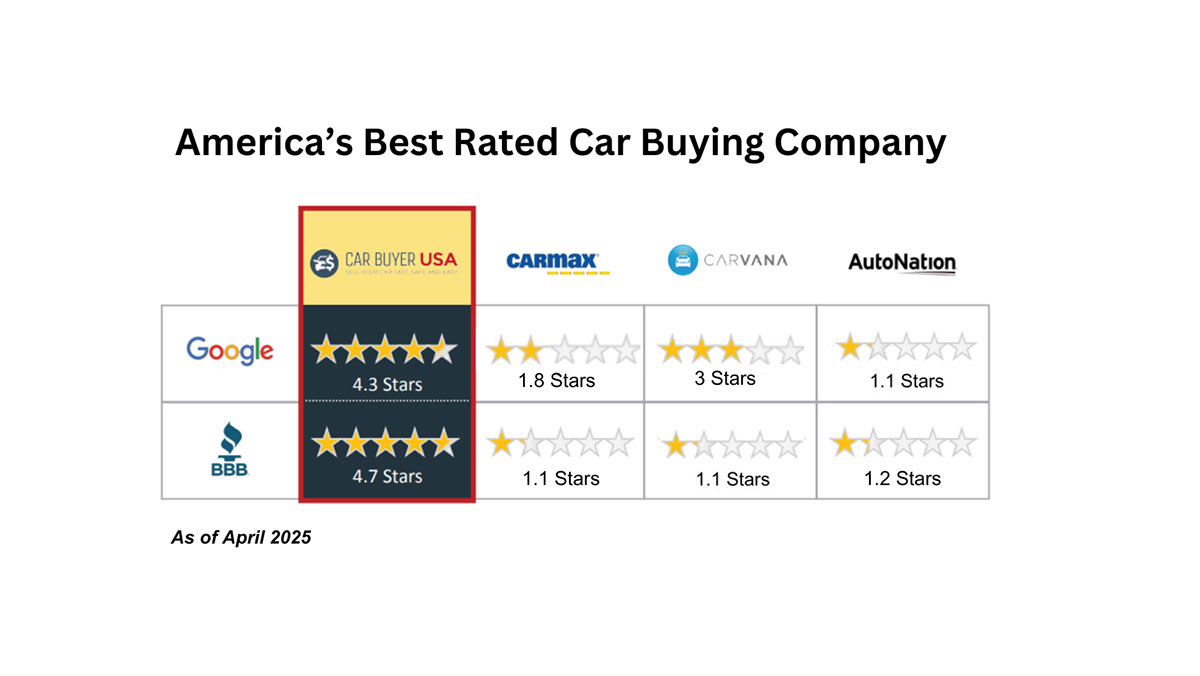
Read MoreCarBuyerUSA's Ratings VS The Big Guys

How It Works
We pay cash for cars, trucks, & SUVs, in any condition, anywhere in the Continental USA.
1
Get an Instant Cash Offer
Enter the Year, Make, Model, Trim Level & Miles (No VIN Required) and your cash offer appears onscreen (94% of the time)
2 Accept your offer
CarBuyerUSA offers are Cash Market Value.
Funds are guaranteed and paid at the time of pickup or drop-off
3Talk to an Agent
Your CarBuyerUSA representative schedules a no obligation inspection. In most markets an on-site mobile inspection can be arranged. The digital purchase agreement takes less than 60 seconds to complete.
4 Get Paid
When CarBuyerUSA picks up your truck, you are paid on the spot in full with guaranteed funds – entire process is hassle free.
Inspection, title work & pick up are all FREE.