Read This Before You Lose More Money
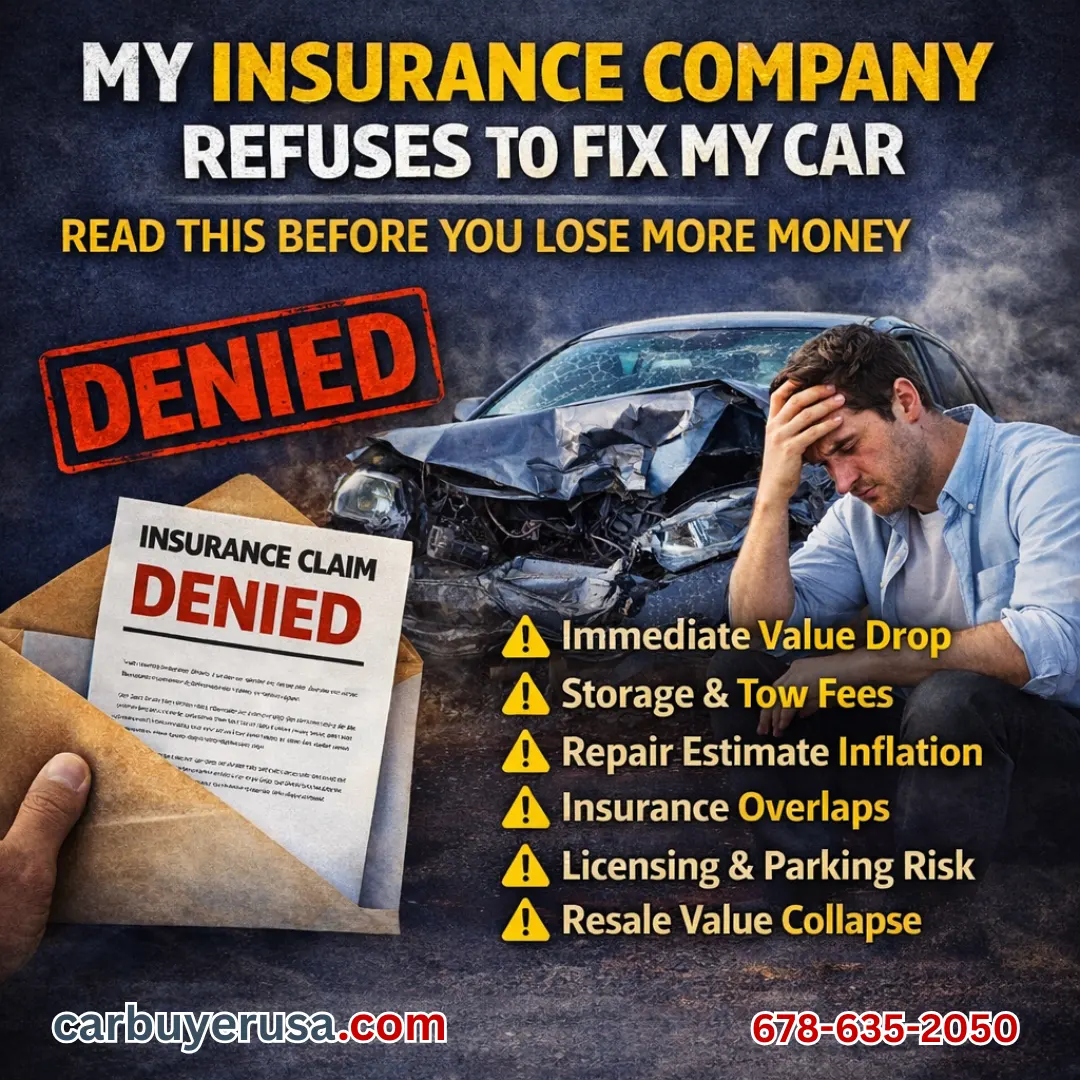
When your insurance company refuses to fix your car, that’s not a delay, a misunderstanding, or a paperwork issue. That’s a final financial decision. The insurer has already run the numbers and decided repairing your vehicle costs them more than walking away. From that moment on, the car stops being transportation and starts being a liability you are paying to keep.
Why Insurance Companies Walk Away From Repairs
Insurance companies do not exist to fix cars. They exist to control exposure and reduce payouts. Repairs are refused most often when:
- Repair costs approach or exceed vehicle value
- Structural or frame damage increases liability
- Airbags or safety systems deploy
- The car has high mileage or prior accident history
- Policy exclusions give the insurer an exit
Even when a vehicle can be repaired, insurers often decide it shouldn’t be — at least not with their money.
What Happens Immediately After Repairs Are Refused
Once insurance refuses repairs, ownership responsibility doesn’t change — but value does. You still own the vehicle, but you now manage all consequences alone. This is where many owners pause, hoping the situation improves.
It doesn’t. Instead, costs begin stacking quietly.
⚠️ Cost Stack Progression: What Happens After Insurance Refuses Repairs
This is not a one-time loss. It’s a stacking sequence. Each layer adds cost and removes leverage.
Order of
Impact |
Cost Layer |
What Actually Happens |
|---|---|---|
1 |
Immediate Vehicle
Devaluation |
The moment repairs are refused, market value drops.
Dealers and buyers now see risk instead of resale value. |
2 |
Diagnostic & Tear-Down
Fees |
Shops charge to inspect, scan, or disassemble. These
fees are non-refundable and don’t lower repair costs. |
3 |
Storage & Tow Charges |
Non-drivable cars rack up daily fees quickly — even
short delays cost real money. |
4 |
Repair Estimate Inflation |
Initial quotes rarely hold. Supplemental damage
discovered mid-repair increases the bill. |
5 |
Insurance Overlap Costs |
Owners often keep paying insurance on a car they can’t
drive — or cancel and risk coverage gaps. |
6 |
Registration, Parking &
Compliance Risk |
Expired tags, tickets, and HOA penalties turn one issue
into multiple fines. |
7 |
Private Sale Value
Collapse |
The words “insurance refused repairs” kill buyer
confidence and destroy negotiating power. |
This stack grows until the vehicle leaves your possession. Waiting never reduces it.
Why Paying for Repairs Usually Makes Things Worse
Many owners believe repairing the car themselves will “fix” the problem. In reality, it often deepens it.
- Body shops uncover hidden damage once work begins
- Safety systems require expensive recalibration
- Accident history permanently lowers resale value
- Repair costs are rarely recovered at sale
Spending thousands to repair a car insurance already rejected usually leads to regret.
Why Selling Privately Isn’t the Solution People Expect
Private buyers want clean stories and predictable risk. An insurance refusal does the opposite. Expect:
- Aggressive lowball offers
- Endless inspections and questions
- Buyers backing out at pickup
- Long delays that further reduce value
Time becomes the enemy.
The Smart Exit When Insurance Is Done
Once insurance exits, the smartest move for many owners is to exit the vehicle.
That’s where CarBuyerUSA comes in.
CarBuyerUSA buys vehicles insurance refuses to fix. No repairs required. No adjuster approval. No waiting. They evaluate the vehicle based on real market demand and remove it before the cost stack grows further.
Final Word
If your insurance company refuses to fix your car, standing still costs money. The value drops. The costs stack. The stress compounds.
Selling the vehicle and moving forward isn’t giving up — it’s making the only decision that stops the loss. CarBuyerUSA.com ends the problem cleanly.