What Owners Should Do Immediately
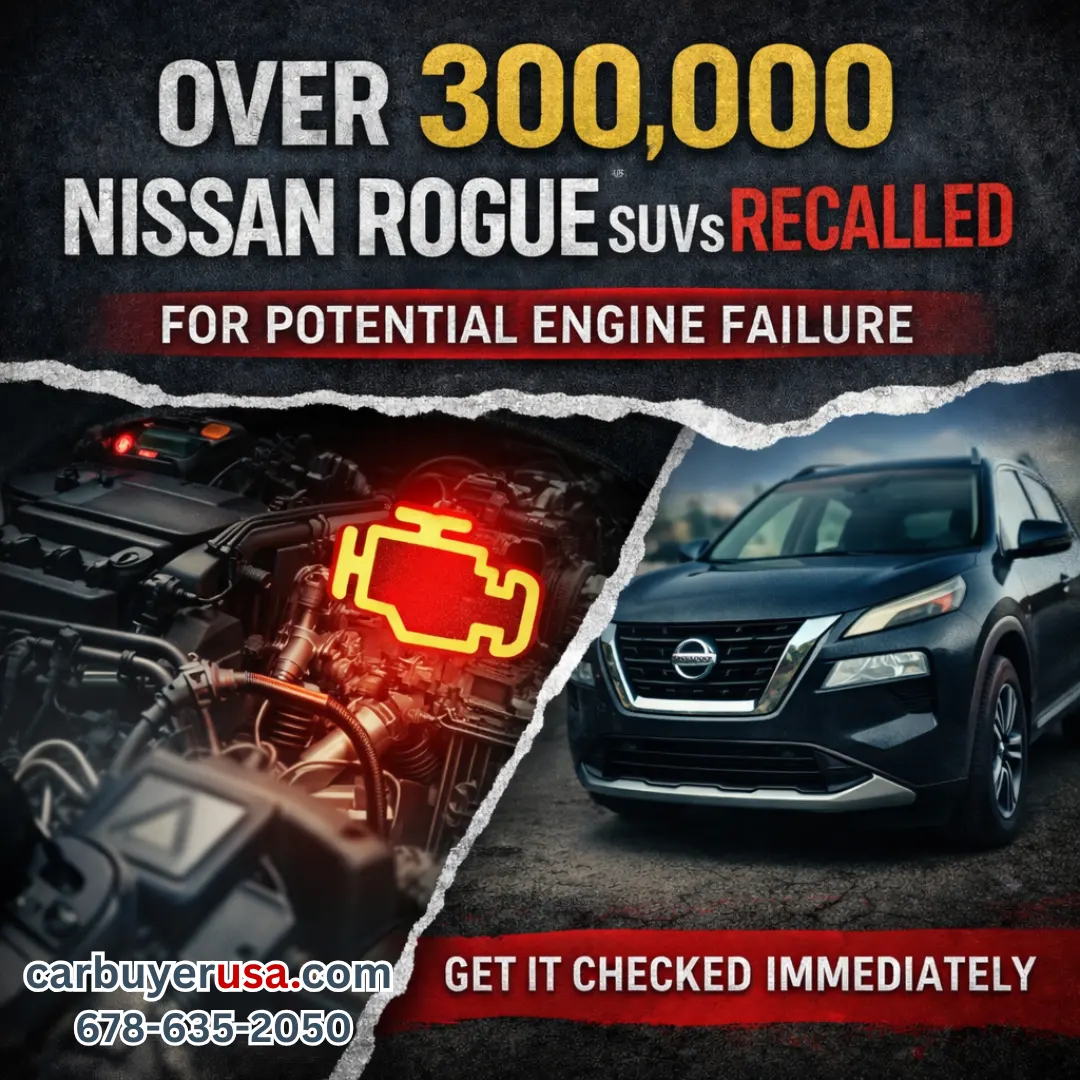
More than 300,000 Nissan Rogue SUVs are being recalled due to a serious engine defect that could lead to sudden failure. The recall impacts certain 2023–2025 Rogue models equipped with Nissan’s 1.5-liter three-cylinder variable-compression turbocharged engine, a powertrain designed for fuel efficiency and performance, but now under scrutiny for reliability concerns.
This is not a minor technical update. This is a recall tied to possible engine damage that can escalate quickly.
What’s Going Wrong?
At the center of the issue is internal engine lubrication and bearing integrity. Under certain operating conditions, engine components may not receive proper lubrication. When that happens, internal bearings, the critical parts that allow engine components to rotate smoothly can overheat or wear prematurely.
If a bearing fails, friction increases dramatically. That friction can trigger internal damage, power loss, or in extreme cases, complete engine seizure. A seized engine can shut down unexpectedly while driving, a serious safety concern, particularly at highway speeds or in traffic. In some situations, severe internal damage could even create secondary hazards if engine components break apart internally.
Warning Signs to Watch For
Owners should be alert for early symptoms, including:
- Knocking or ticking engine noises
- Rough idling or vibration
- Reduced power
- Dashboard warning lights (especially check engine alerts)
- Sudden engine hesitation
Even subtle changes in engine behavior should not be ignored.
What Nissan Is Doing
As part of the recall process, dealerships will inspect affected vehicles and update engine control software where necessary. In some cases, technicians will examine engine oil systems for signs of internal wear. If damage is detected, the engine may be repaired or replaced at no cost to the owner.
Owners will receive official notification by mail, but waiting for a letter isn’t required. Anyone driving a 2023–2025 Rogue with the 1.5-liter turbo engine should check their vehicle identification number (VIN) through Nissan or a dealership to confirm whether their vehicle is included.
Recall repairs are free — but ignoring them can be expensive.
Why This Matters
The Nissan Rogue is one of the brand’s top-selling vehicles in the U.S. A recall of this size affects a significant number of drivers. For many families, the Rogue is a daily commuter, school-run vehicle, or road-trip SUV. An unexpected engine shutdown isn’t just inconvenient, it’s potentially dangerous.
This situation also highlights a broader industry reality: modern engines are increasingly complex. Turbocharging, variable compression technology, and advanced fuel efficiency systems deliver performance and lower emissions, but they also create tighter tolerances and more potential failure points.
When something goes wrong internally, the consequences can escalate quickly.
What Owners Should Do Now — Quick Action Checklist
If you own one of these Rogues, here’s what to do immediately:
- Check your VIN with Nissan or your local dealer to confirm recall status.
- Schedule a service appointment as soon as possible if your vehicle is affected.
- Monitor engine behavior closely. Don’t ignore warning lights or unusual sounds.
- Avoid delaying service. Even if your vehicle seems fine, preventative inspection matters.
- Keep documentation of recall service for your records and future resale protection.
Recalls are not optional suggestions! They are safety interventions.
If you drive an affected Nissan Rogue, treat this seriously. A proactive inspection today could prevent a breakdown or worse!