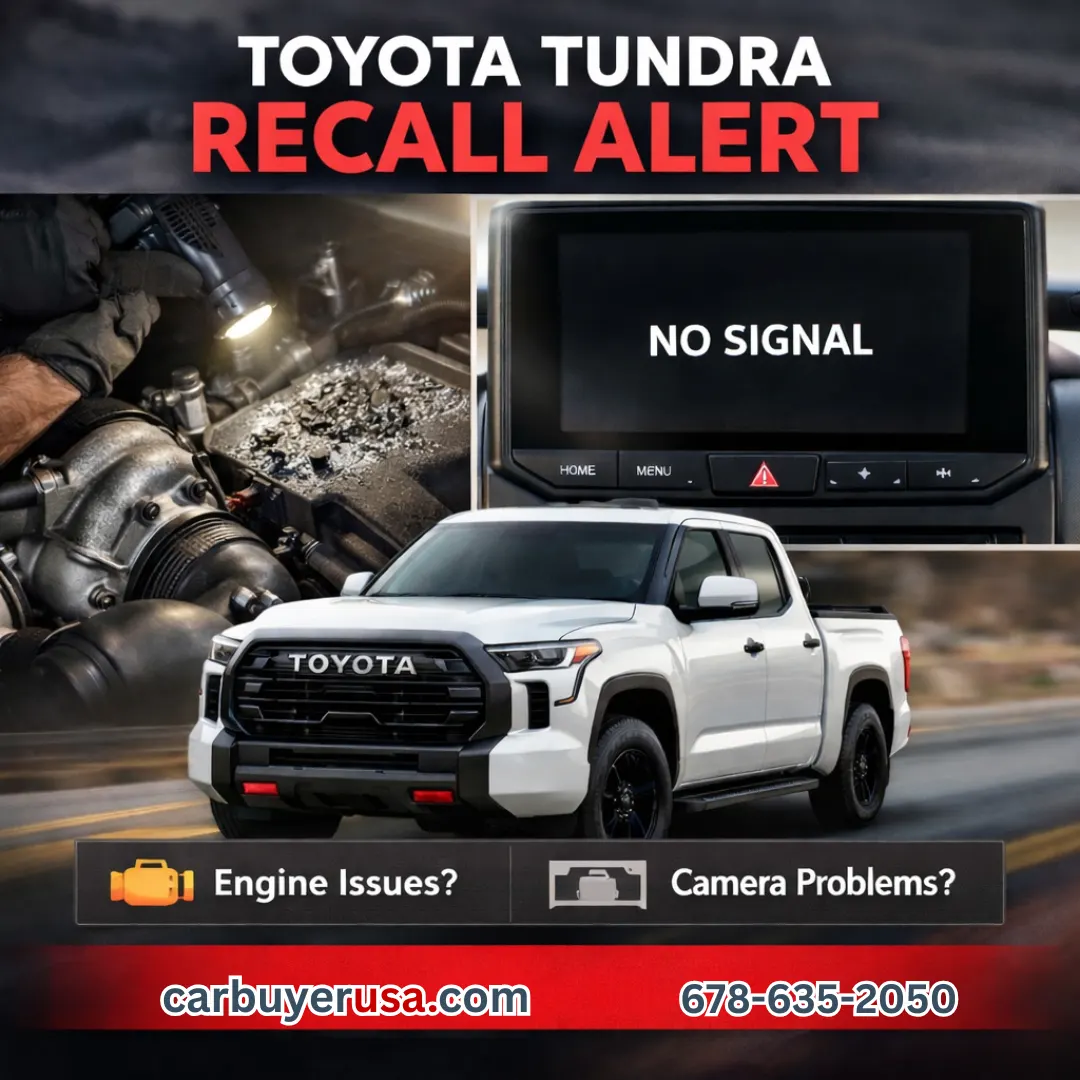
Recent recall developments involving the Toyota Tundra have highlighted two very different types of modern vehicle risks: precision manufacturing inside high-performance engines and software reliability within digital safety systems. As today’s trucks become more advanced, even minor defects, mechanical or electronic. can lead to large-scale corrective actions.
One of the most significant recall actions affects certain 2022–2024 Tundra models equipped with the twin-turbocharged V6 engine. In specific production runs, residual machining debris may have remained inside the engine during assembly. While microscopic, these metal particles can circulate through internal components over time. That contamination can potentially lead to knocking sounds, rough engine performance, hesitation under acceleration, or — in more serious situations. engine stalling.
A stall while driving is more than an inconvenience; it can create a safety hazard, particularly at highway speeds. Because of that risk, affected vehicles are being inspected and repaired. Depending on the findings, corrective action may range from detailed inspection and cleaning to more extensive engine repair or replacement.
Separate from the engine issue, certain 2024–2025 Tundra models have been recalled due to concerns involving the multimedia display system. The integrated screen controls backup camera visibility and parking assist features. In affected trucks, the display may freeze, remain stuck, or fail to properly show the rearview image when shifting into reverse. Since rear visibility systems are federally mandated safety features, even intermittent failures require immediate correction.
To better understand the situation, here is a simplified breakdown:
🔍 Toyota Tundra Recall Overview
Issue Type |
Affected Model
Years |
Primary Risk |
Typical Remedy |
|---|---|---|---|
Engine Debris |
2022–2024 |
Knocking, power loss,
possible stall |
Inspection and engine repair or
replacement |
Multimedia
Display |
2024–2025 |
Backup camera
malfunction |
Software update to system
control module |
While these recalls address different systems, both reinforce the importance of precision, whether inside an engine block or within electronic control modules. Modern trucks rely on tightly engineered mechanical tolerances and complex digital architecture. A flaw in either area can trigger corrective action.
It’s important to emphasize that recalls are preventive safety measures. They do not automatically mean a vehicle will fail. Manufacturers identify potential defect patterns and correct them before widespread incidents occur. Repairs are performed at no cost to owners.
📞 What to Do if You’re Affected
Toyota dealers will repair these issues free of charge.
If your truck is included in a recall, you should receive an official notice by mail explaining the next steps.
To verify your vehicle’s status or ask questions, you can contact Toyota customer support directly at 1- 800-331-4331. You may also use Toyota’s official recall lookup tools by entering your Vehicle Identification Number (VIN) to confirm whether your specific truck is affected.
Checking your VIN is the fastest way to determine eligibility, since recalls often apply only to certain production batches rather than every truck within a model year.
For owners, the best course of action is simple: stay informed, respond promptly to recall notifications, and schedule repairs as soon as possible. Addressing recall service quickly helps maintain safety, performance, and long-term reliability.
As trucks continue to evolve with more power and more technology, oversight and corrective measures remain part of responsible manufacturing. What ultimately matters most is how efficiently issues are addressed, and ensuring drivers stay protected on the road.