And It's Costing Them Big Time With Mechanical Repairs!
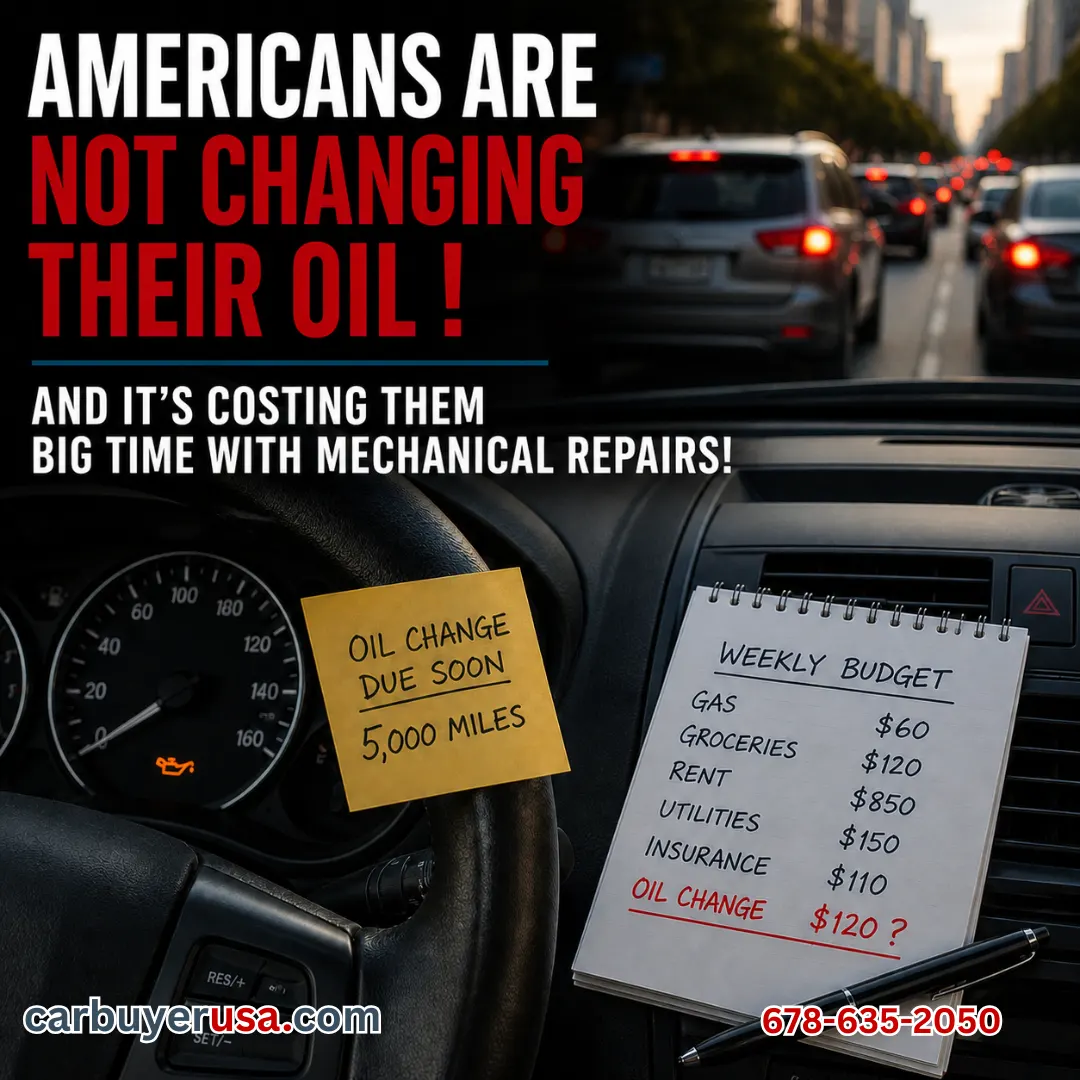
There was a time when getting an oil change was one of the smaller expenses of owning a car. The reminder appeared, you found an hour to get it done, and you moved on with your life.
For a growing number of Americans, it isn't that simple anymore.
Gasoline, car insurance, groceries, housing, utilities and other household expenses are all competing for the same paycheck. When the money doesn't stretch far enough, people start deciding which expenses absolutely have to be paid today and which ones might survive until next payday.
Unfortunately, vehicle maintenance is becoming one of the things that gets pushed aside. Recent consumer research found that more than half of Americans consider vehicle maintenance unaffordable. Nearly half reported postponing vehicle maintenance or repairs because of high gasoline costs. Significant numbers of consumers are also reducing what they spend on automobile insurance.
Those numbers help explain something happening in driveways and garages across the country: people aren't necessarily forgetting to maintain their vehicles. They're prioritizing the money they have available.
A Routine Oil Change Isn't Pocket Change Anymore
Oil-change prices depend on the vehicle, engine size, oil capacity, type of motor oil and service provider. However, current pricing estimates across America's largest cities demonstrate how easily a routine oil change can become another triple-digit household expense.
City |
Typical Oil Change Cost |
|---|---|
New York |
$129 |
Los Angeles |
$130 |
Chicago |
$119 |
Houston |
$113 |
Phoenix |
$118 |
Philadelphia |
$117 |
San Antonio |
$108 |
San Diego |
$128 |
Dallas |
$118 |
Fort Worth |
$118 |
Across these cities, the typical cost works out to approximately $120. For a household already struggling with everyday expenses, $120 isn't insignificant. It could be groceries. It could cover part of an electric bill. More importantly for someone who relies on a vehicle to earn a living, it could buy the gasoline necessary to keep getting to work.
That's where the priorities become painfully obvious.
You Can Postpone Maintenance. You Can't Drive Without Fuel.
The maintenance reminder can be dismissed, the oil change can wait another week, and a repair that isn't keeping the car from running may get pushed into next month. When money is tight and the vehicle still starts every morning, postponing maintenance can feel like the easiest expense to put off.
Some financially stressed motorists may even reduce insurance coverage, although doing so can create serious financial consequences and, depending on the coverage involved, potentially legal or lender- related problems.
But there's one automobile expense that is much harder to postpone.
Fuel.
If the vehicle gets someone to work, takes the children to school or handles the household's daily transportation, gasoline becomes essential. The tank has to have enough fuel for tomorrow, regardless of what other automotive expenses are waiting.
So a driver looks at the budget and makes what seems like the least damaging choice. The car is still running, the oil light isn't on, and nothing sounds wrong, so putting off the oil change for a little longer can seem like a reasonable gamble.
The Problem With "I'll Do It Next Payday"
Modern vehicles generally have longer oil-change intervals than cars from decades ago, and drivers should always follow the manufacturer's maintenance schedule for their specific vehicle. But longer service intervals don't mean oil changes are optional. Motor oil has several jobs inside an engine. It reduces friction between moving components, assists with heat management and carries contaminants that are eventually captured by the oil filter or removed when the oil is changed.
As the oil accumulates mileage and operating time, its ability to protect the engine eventually declines. Extending service far beyond the manufacturer's recommendations can increase deposits, contamination, friction and internal wear.
The danger isn't necessarily immediate. A driver can postpone an oil change and the vehicle may continue running normally, making it surprisingly easy to put it off again. Next payday becomes next month, and before long, another few thousand miles have been added to the odometer.
Most people aren't skipping a $120 oil change because they don't care about their cars. They're doing it because everything else has become more expensive, too. The maintenance expense hasn't disappeared; the risk has simply been pushed further down the road. A household budget may understand why the oil change had to wait, but the engine doesn't.
At CarBuyerUSA.com, we see firsthand how quickly the cost of owning and maintaining a vehicle can add up. If keeping up with repairs and maintenance is becoming more than your budget can handle, it may be worth finding out what your vehicle is worth now, before another repair bill makes that decision for you.
Coming in Part 2:
The $120 Oil Change You Skipped Could Become an $8,000 Engine