Title Brands and What They Mean
A title brand is a permanent note on a vehicle’s title that tells you something important about its history, condition, or legal status. States use different wording, but the brands all signal that the vehicle has experienced something beyond normal wear, such as major damage, a manufacturer buyback, or prior use as a taxi or police vehicle.
Because title branding standards vary by state, the same vehicle history may be labeled differently depending on where it was titled. For example, California lists common brands such as salvage, rebuilt, lemon law buyback, prior taxi, prior police, and water damage, while Wisconsin uses brands such as claim paid, flood damaged, hail damaged, rebuilt salvage, and manufacturer buyback.
Common Brand Types
- Salvage
- A salvage brand usually means the vehicle was declared a total loss because repairs were too expensive relative to its value or the damage was severe enough to make it unsafe or uneconomical to repair. This is generally the biggest red flag for buyers because it often carries the largest value loss and the greatest uncertainty about hidden damage.
- Rebuilt or rebuilt salvage
- A rebuilt title means a vehicle once had a salvage brand but has since been repaired and inspected so it can return to the road. Even when repaired properly, a rebuilt vehicle still sells for less than a comparable clean-title vehicle because the prior damage remains part of its history.
- Flood or water damage
- Flood-branded vehicles have been exposed to significant water damage, and that can create long-term problems with wiring, electronics, corrosion, mold, and safety systems. These vehicles often lose substantial value because hidden water-related damage can show up long after the repair is finished.
- Lemon law buyback / manufacturer buyback
- This brand means the manufacturer repurchased the vehicle after repeated defects could not be fixed within a reasonable number of attempts. These vehicles are not necessarily unsafe, but they usually carry a stigma because buyers worry the original defect may return or indicate broader quality issues.
- Prior taxi or prior police
- These brands indicate heavy commercial or fleet use, which often means higher mileage and more wear than a typical privately owned vehicle. Value is usually lower because buyers expect more use, more downtime, and more maintenance history risk.
- Junk, dismantled, or nonrepairable
- These brands usually mean the vehicle is only suitable for parts or scrap and cannot legally return to normal road use in many states. In practical terms, the resale value is minimal because the vehicle is no longer considered a normal drivable asset.
Value Loss Guide
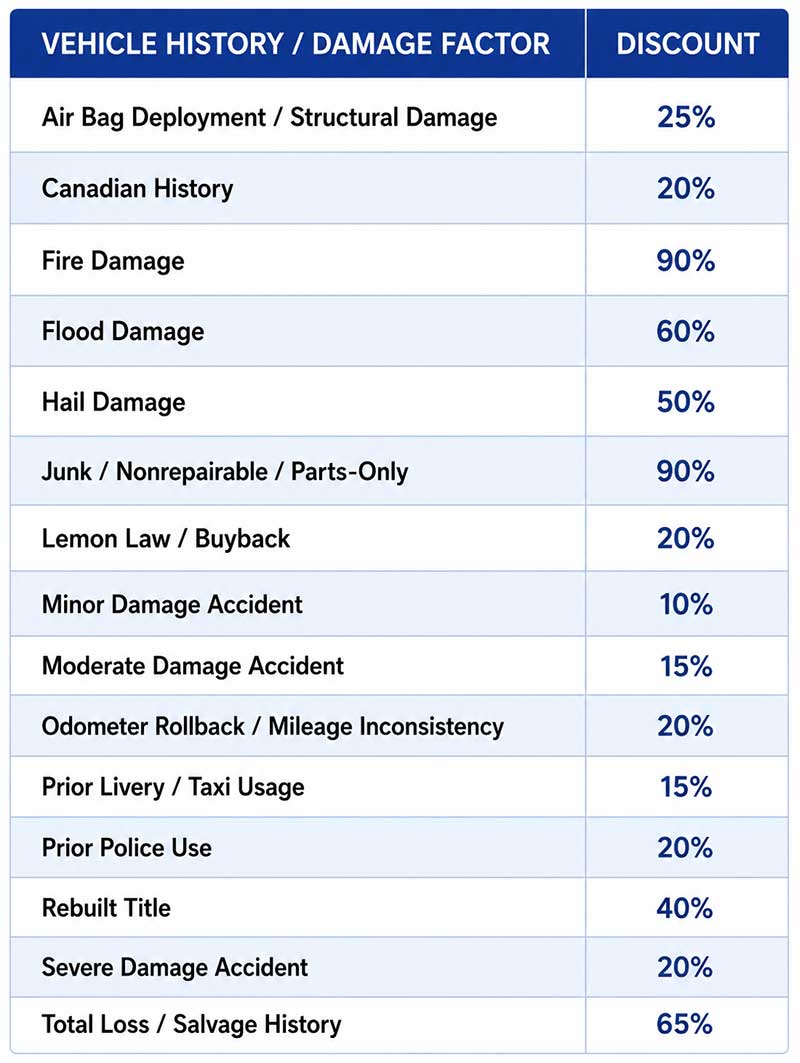
A branded title almost always reduces value because the market discounts vehicles with a known history of damage, repairs, or unusual use. The exact loss depends on the brand, the age of the vehicle, the quality of repairs, and local buyer demand, but the discount is often large enough to affect financing and insurance as well.
A simple rule of thumb is that salvage and flood brands tend to create the biggest losses, rebuilt titles usually sit in the middle, and lower-risk brands like prior taxi or prior police are often discounted more for mileage and wear than for structural damage. Clean, well-documented repairs can help, but a brand never fully disappears from the title history.
Buyer Protection Tips
Always check the front of the title and review the vehicle history before buying, because the brand is a permanent part of the record. Ask the seller directly whether the vehicle has ever been branded in another state, since interstate title transfers can sometimes hide earlier history if you only look at the current document.
You should also compare the title brand with a vehicle history report and a physical inspection, especially for signs of prior flood, frame, or airbag damage. A lower purchase price can be attractive, but the discount should reflect the real risk, repair quality, and future resale loss.