Maybe Stop Trying to Be Your Own Car Dealership.

Selling your car privately sounds great on paper. You set the price, advertise the vehicle, find a buyer, collect the money, and congratulate yourself for cutting out the middleman. In theory, you might squeeze a few extra dollars out of the deal.
Then actual humans get involved. Suddenly, you're answering messages at midnight, sending additional photos to people who disappear, explaining the same maintenance history six times, and scheduling your Saturday around someone who never shows up. The private-sale premium starts looking considerably less impressive once you calculate what you're investing in time, aggravation, and risk.
That doesn't mean selling privately is always a bad idea. A desirable vehicle in excellent condition can attract a serious private buyer willing to pay retail-level money. If you have the time, understand the paperwork, know how to safely verify payment, and don't mind dealing with strangers, it can work.
But there's an important distinction: asking more isn't the same as getting more. You can list your vehicle for $30,000 all day long. The only number that matters is what a legitimate buyer is actually willing and able to pay.
The Real Private-Sale Checklist
What You Have to Handle |
What It Really Means |
|---|---|
Determine the asking price |
Know the actual market, not just online listings |
Advertise the vehicle |
Photos, descriptions and repeated inquiries |
Screen potential buyers |
Separate serious buyers from scammers |
Arrange test drives |
Put strangers behind the wheel of your vehicle |
Negotiate the price |
Expect lowball offers |
Verify payment |
Make absolutely sure the money is legitimate |
Handle the title |
Follow your state's transfer requirements |
Deal with an existing loan |
Coordinate payoff and lien release |
Complete the sale |
Make sure ownership is properly transferred |
The biggest private-sale issue today isn't inconvenience. It's trust. You're selling an asset potentially worth tens of thousands of dollars to someone you don't know. Fake payments, fraudulent cashier's checks, identity scams, bogus financing stories, and other schemes have made casually handing your keys to an internet stranger a much bigger decision than it once was.
Then there's the vehicle itself. Allowing an unknown buyer to test-drive your car introduces another layer of risk. Even perfectly legitimate buyers can damage a vehicle during a test drive, and figuring out insurance and responsibility afterward isn't anyone's idea of a productive Saturday.
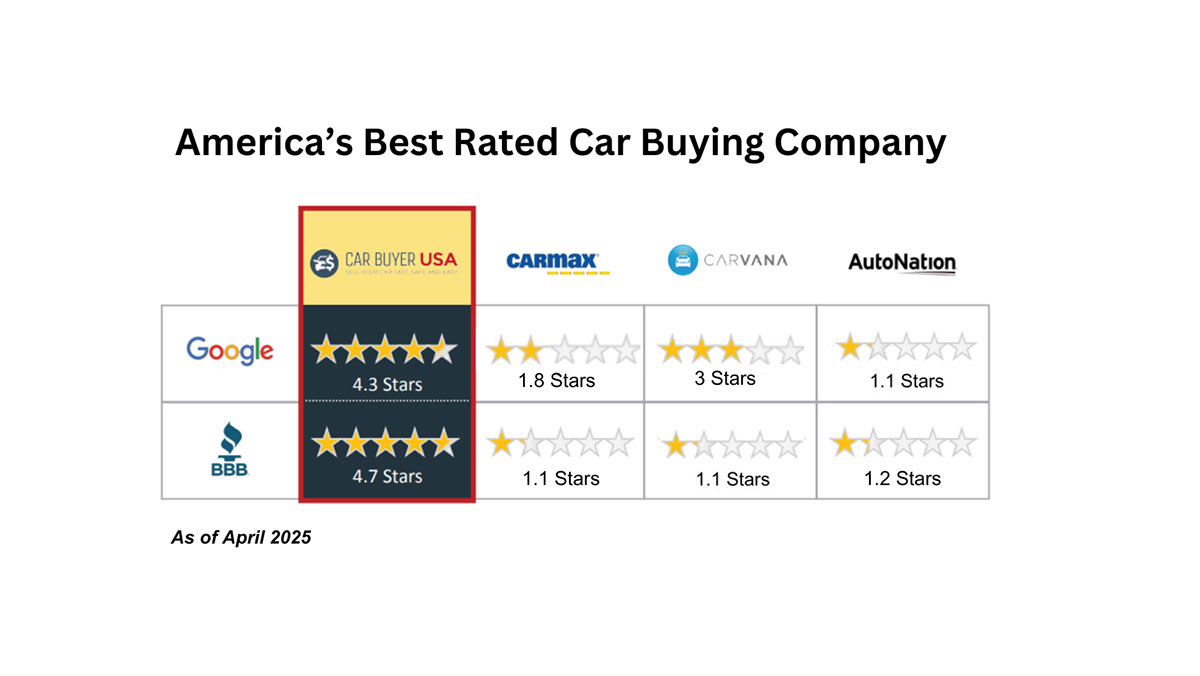
This is where sellers should put a dollar value on ease and safety, not just price. CarBuyerUSA gives owners another option. Instead of immediately listing your vehicle and hoping for the best, find out what a professional nationwide buyer is willing to pay first. CarBuyerUSA can provide your vehicle value in about 20 seconds, giving you a real number to consider before you turn your driveway into a miniature used- car lot.
That information gives you leverage. If the difference between a realistic private-sale price and a professional offer is small, ask yourself what your time is worth. How much is avoiding strangers, repeated negotiations, questionable payments, advertising, test drives, and paperwork headaches worth to you?
For plenty of sellers, the answer is: quite a bit.
The best way to sell your car isn't automatically private party, dealership trade-in, or any other single method. It's the method that delivers the strongest combination of price, security, convenience, and confidence that the transaction will actually get completed. Before you spend two weeks discovering just how creative strangers can become with the phrase "What's your lowest price?", give CarBuyerUSA.com a shot. Twenty seconds could save you a whole lot more than twenty seconds.