YOU PAID THOUSANDS EXTRA FOR THOSE FACTORY UPGRADES. BUT WILL SOMEONE PAY YOU MORE FOR THEM WHEN IT'S TIME TO SELL?
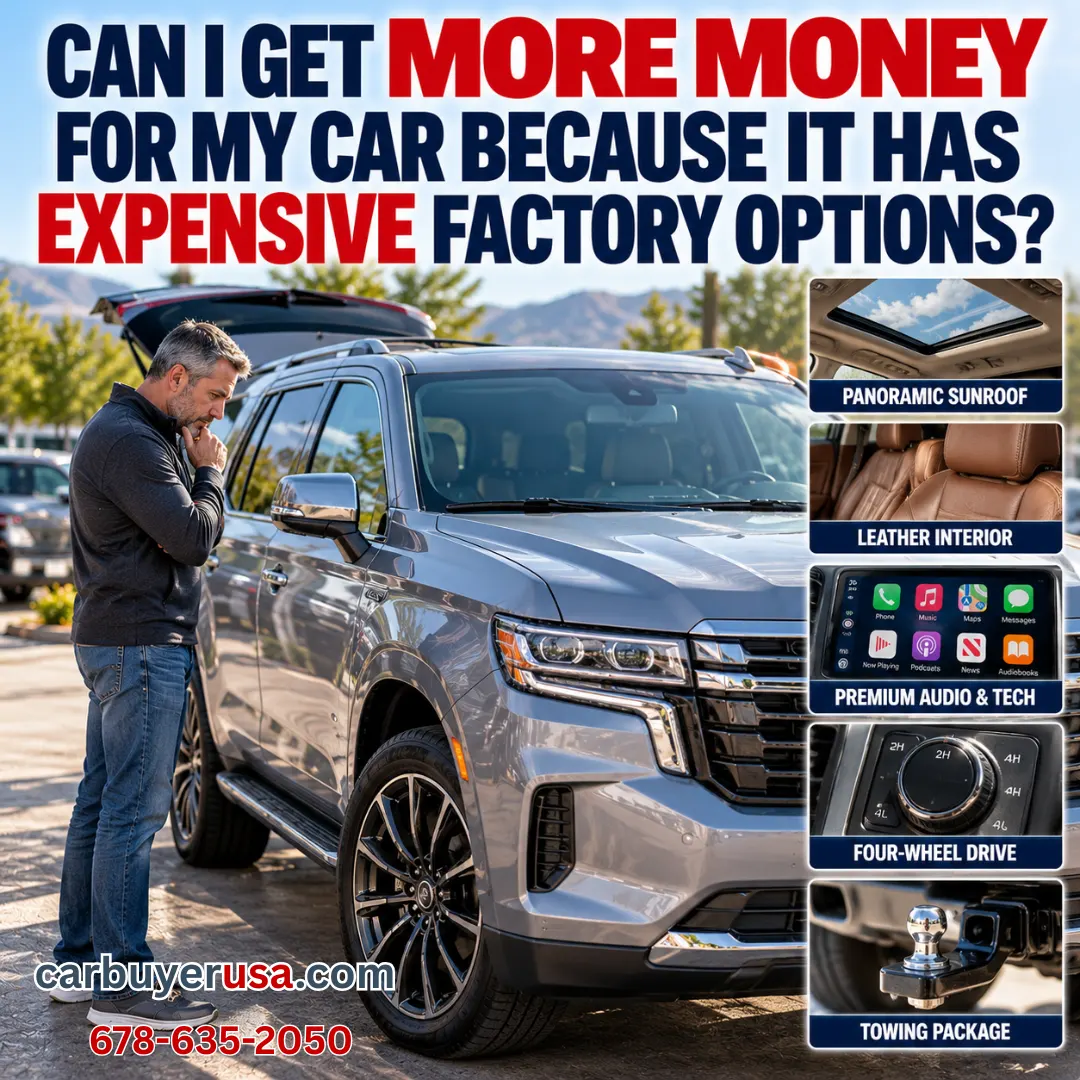
When you purchased your vehicle, upgrading to leather upholstery, a premium sound system, a panoramic sunroof, or a more powerful engine probably seemed worth the additional expense.
But here's something many owners discover when selling: the options that cost the most when your vehicle was new aren't necessarily the ones that add the most money to its resale value.
Factory equipment can absolutely influence what a vehicle is worth. The challenge is understanding which features used-car buyers actually want—and how much they're willing to pay.
Why Don't Expensive Factory Options Hold Their Original Value?
New-vehicle pricing reflects manufacturing costs, equipment packages, brand positioning, and manufacturer profit margins. Used-vehicle pricing works differently. Buyers compare available vehicles based on age, mileage, condition, reliability, equipment, and market demand. They generally aren't willing to reimburse the original owner for every optional feature purchased years earlier.
For example, a $3,500 premium audio and technology package might make a vehicle more desirable, but that doesn't mean it contributes $3,500 to its current market value. Original option cost and current resale contribution are two completely different numbers.
Which Factory Options Can Make Your Car More Valuable?
Certain equipment can create meaningful differences between otherwise comparable vehicles. All-wheel drive and four-wheel drive: These systems can be particularly desirable in regions with snow, mountainous terrain, or recreational driving needs. Their value depends on the vehicle and local demand.
Upgraded engines and performance packages: More powerful engines, towing packages, and factory performance equipment may attract buyers seeking specific capabilities. However, fuel costs and insurance expenses can influence demand.
Advanced safety technology: Adaptive cruise control, blind-spot monitoring, automatic emergency braking, and other driver-assistance features can strengthen a vehicle's appeal, particularly when comparing similar model years.
Luxury and comfort packages: Heated and ventilated seats, upgraded upholstery, premium interiors, and panoramic roofs may help distinguish higher-equipped vehicles.
Factory towing equipment: Properly equipped trucks and SUVs may appeal to buyers who need specific towing capabilities.
Not every option increases value equally. Some features are now standard on newer vehicles, reducing the premium buyers will pay for them on older models.
What Might Those Factory Upgrades Actually Be Worth?
Consider the following hypothetical examples.
Factory Option |
Original Extra Cost |
Illustrative Resale Contribution |
|---|---|---|
Premium audio package |
$1,500 |
200-500 |
Panoramic sunroof |
$1,800 |
300-700 |
Upgraded leather interior |
$2,000 |
300-800 |
All-wheel-drive upgrade |
$2,500 |
800-1500 |
Advanced technology package |
$3,000 |
400-1000 |
These amounts are illustrative examples, not published valuation data or guaranteed adjustments. Actual option costs and resale contributions vary by vehicle, model year, market, and condition. Values should not be added together to estimate an offer.
Why Does Your Vehicle's Trim Level Matter?
Factory options and trim levels aren't interchangeable. A higher trim may include upgraded equipment as standard, while another vehicle may have similar features through optional packages.
Two vehicles sharing the same model name can therefore have different original specifications and resale values. Accurate identification matters. Engine configuration, drivetrain, trim, and factory-installed equipment should be considered together rather than assuming every vehicle of the same model is worth the same amount.
Can Aftermarket Upgrades Increase My Selling Price?
Sometimes, but aftermarket modifications are generally evaluated differently from factory-installed equipment.
Custom wheels, performance tuning, suspension modifications, and expensive audio installations may appeal to certain buyers while discouraging others. Modifications can also introduce questions about reliability, warranty coverage, and future maintenance. Spending $5,000 customizing your car doesn't mean you've created $5,000 in additional resale value.
Don't Let Your Factory Upgrades Go Unnoticed!
Before selling, identify your vehicle's correct trim, drivetrain, engine, and factory-installed packages. Original window stickers, build sheets, and manufacturer equipment records can help establish its specifications.
Then compare your vehicle with genuinely comparable examples—not simply others sharing its year, make, and model.
At CarBuyerUSA, sellers can begin checking their vehicle's potential value online in 20 seconds, without providing their name, email address, phone number, or VIN. We purchase vehicles nationwide, giving owners a convenient way to explore selling without managing private advertisements and buyer appointments.
Your Car's Extras Deserve a Closer Look!
Those factory upgrades might make your vehicle more desirable than a basic version of the same model. But their actual resale contribution depends on today's market—not yesterday's window sticker.
BEFORE YOU SELL YOUR WELL-EQUIPPED VEHICLE FOR A BASIC-MODEL PRICE, GIVE CARBUYERUSA THE OPPORTUNITY TO EVALUATE WHAT YOU'RE DRIVING!
Visit CarBuyerUSA.com and explore what your vehicle could bring.
You paid for the extras. Make sure they're part of the conversation when it's time to sell!