Yes — But Before You Sell Grandpa's Car, Make Sure The Paperwork Says You Actually Have The Right To Sell It
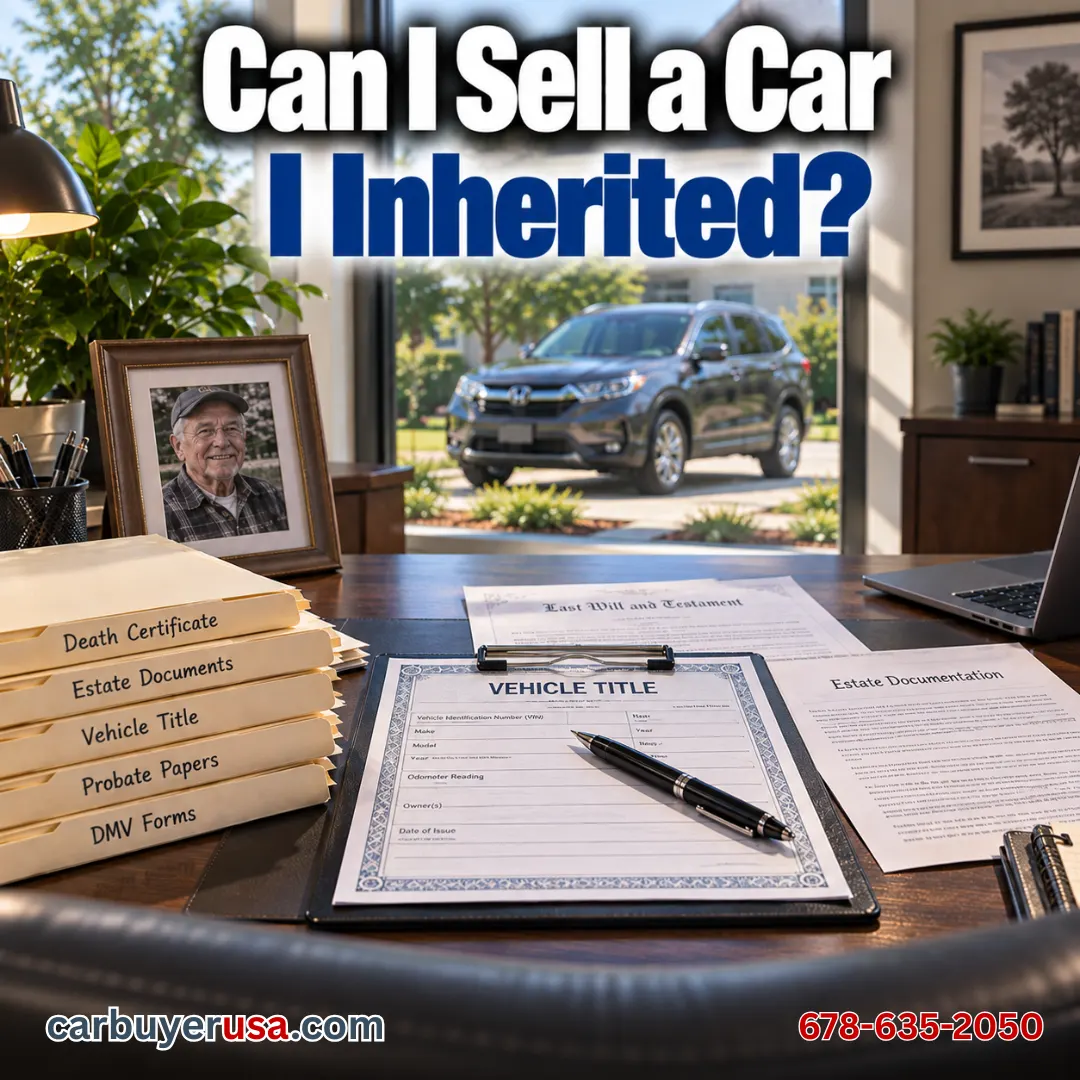
Inheriting a vehicle can happen under emotional circumstances, and figuring out what to do with the car may be the last thing you feel like dealing with. Maybe you don't need another vehicle. Maybe you live across the country. Maybe the car has been sitting in a garage for months while everyone tries to sort out the estate.
Eventually, though, somebody asks the practical question:
Can I just sell it?
Usually, an inherited vehicle can be sold. But there's an important catch: you generally can't sell a vehicle simply because the previous owner intended for you to have it. The ownership and estate paperwork have to support your legal authority to transfer it.
That's where inherited-car sales can become more complicated than ordinary vehicle sales.
BEFORE YOU WORRY ABOUT VALUE, FIGURE OUT WHO CAN SIGN
If the vehicle has already been properly transferred and titled in your name, selling it may be relatively straightforward.
If the title is still in the deceased owner's name, however, don't assume you can simply sign their name, hand over the keys and call it finished.
Depending on the state and how the estate is being handled, the person authorized to transfer the vehicle could be an executor, personal representative, administrator, surviving spouse or beneficiary who has completed the required estate process.
And because estate and motor-vehicle requirements vary significantly by state, not every inherited-car sale will require the same documents.
What you absolutely don't want is to find a buyer, agree on a price and then discover that nobody involved currently has the authority to sign the title.
INHERITED VEHICLE PAPERWORK CAN GET THICK FAST
Some inherited vehicles are surprisingly easy to transfer. Others involve probate, liens, multiple heirs or missing documents.
Here's the paperwork you may need to locate or obtain before the vehicle can be sold:
Document / Information |
Why It May Be Needed |
|---|---|
Original vehicle title |
Establishes the vehicle's current titled owner and identifies any
recorded lien |
Deceased owner's driver's
license or government-
issued ID card |
Helps verify that the deceased person is the same individual named
on the vehicle title, death certificate and estate documents;
particularly helpful when names, middle initials or other identifying
details differ between documents |
Certified death certificate |
Documents the death of the titled owner and is commonly required in
estate-related vehicle transactions |
Letters Testamentary |
May establish an executor's legal authority to act for an estate when
there is a will. |
Letters of Administration |
May establish an administrator's authority when an estate is being
administered without an executor |
Court appointment / probate
documents |
May be necessary to prove who has legal authority to transfer estate
property |
Will |
May identify the intended beneficiary, although a will alone may not
be sufficient to transfer vehicle ownership |
Small-estate affidavit |
Some states provide simplified procedures for qualifying estates that
avoid or reduce formal probate |
Affidavit of heirship /
inheritance |
May be used in certain jurisdictions to establish entitlement to the
vehicle |
Surviving-spouse
documentation |
Some states have special procedures allowing a surviving spouse to
transfer a vehicle |
Beneficiary / transfer-on-
death documentation |
May apply where the state permits a vehicle title to name a
beneficiary |
Executor or administrator
identification |
Confirms the identity of the person legally signing for the estate |
Beneficiary/heir identification |
May be required during a title transfer or sale |
Current registration |
Helps confirm vehicle and ownership information, although
registration alone generally doesn't establish authority to sell |
VIN and vehicle information |
Must match the title and other ownership documents |
Lienholder information |
Needed if a bank or finance company still has a financial interest in
the vehicle |
Current loan payoff |
Establishes what must be paid to satisfy an outstanding vehicle loan |
Odometer disclosure |
Federal or state disclosure requirements may apply depending on
the vehicle's age and transaction |
State title-transfer forms |
DMV requirements vary, and estate transfers may have their own
specific forms |
Bill of sale |
May document the transaction and purchase amount depending on
state requirements |
Power of attorney |
May be necessary in some circumstances when an authorized
person cannot personally complete required documents |
Multiple-heir consent or
signatures |
Could be necessary depending on how ownership passed and
applicable estate rules |
New title in heir's name |
Some states or circumstances may require the vehicle to be retitled
to the heir before it can be sold to another party |
That's a long list because there is no universal inherited-car packet that works in every situation. You may only need a handful of these documents. Or you may open the glovebox expecting to find the title and accidentally begin your own season of Estate Paperwork: The Series.
WHAT IF THERE'S STILL A LOAN?
Death doesn't automatically erase a vehicle lien. If money is still owed, find out who the lender is and obtain a current payoff amount. Depending on the estate and the transaction, the loan may need to be This is another reason to inspect the title early. Don't wait until you're ready to sell to discover that a bank still has an interest in the car.
DON'T SPEND MONTHS LETTING AN INHERITED CAR SIT
Once the ownership situation is resolved, there's another decision to make.
Do you actually want the vehicle?
Sometimes an inherited car has enormous sentimental value. Keep it if that's what you genuinely want. But if nobody is using it, the car doesn't become more valuable simply because everyone is reluctant to make a decision.
It can continue aging. The battery can die. Tires and brakes can deteriorate while sitting. Insurance, registration or storage expenses may continue. And the used-car market can move while the vehicle collects dust. There is no prize for keeping an unwanted inherited vehicle parked for another year.
GET THE PAPERWORK STRAIGHT — THEN GET A REAL NUMBER
Once you know who legally controls the vehicle and have the documents necessary to sell it, don't guess at what it's worth.
Take the vehicle information to CarBuyerUSA.com and get a price in about 20 seconds without entering your phone number or email first.
CarBuyerUSA buys vehicles nationwide, which can be particularly helpful when an inherited vehicle isn't something you want to advertise privately, negotiate over with strangers or drag from dealership to dealership while you're already dealing with an estate.
Be upfront about the title situation. If the vehicle is still titled to the deceased owner, explain where you are in the estate or inheritance process and provide whatever documentation you already have. And if you're even a little unsure about what is required, don't guess and don't let the paperwork stop you from moving forward. Contact a representative on our team with the documents you do have. Our title administrator can review them, determine what may still be missing and let you know what is needed to complete the sale.
Inherited-vehicle paperwork can look overwhelming when you're staring at titles, death certificates, estate documents and DMV forms all at once. You do not have to figure every piece out by yourself before reaching out.
Go to CarBuyerUSA.com and find out what the vehicle can put back into your hands instead of leaving someone else's car sitting indefinitely in your driveway.
The car may have been left to you. What happens to it next is your decision.