If You Never Killed the Engine at a Red Light, Did You Really Learn to Drive?
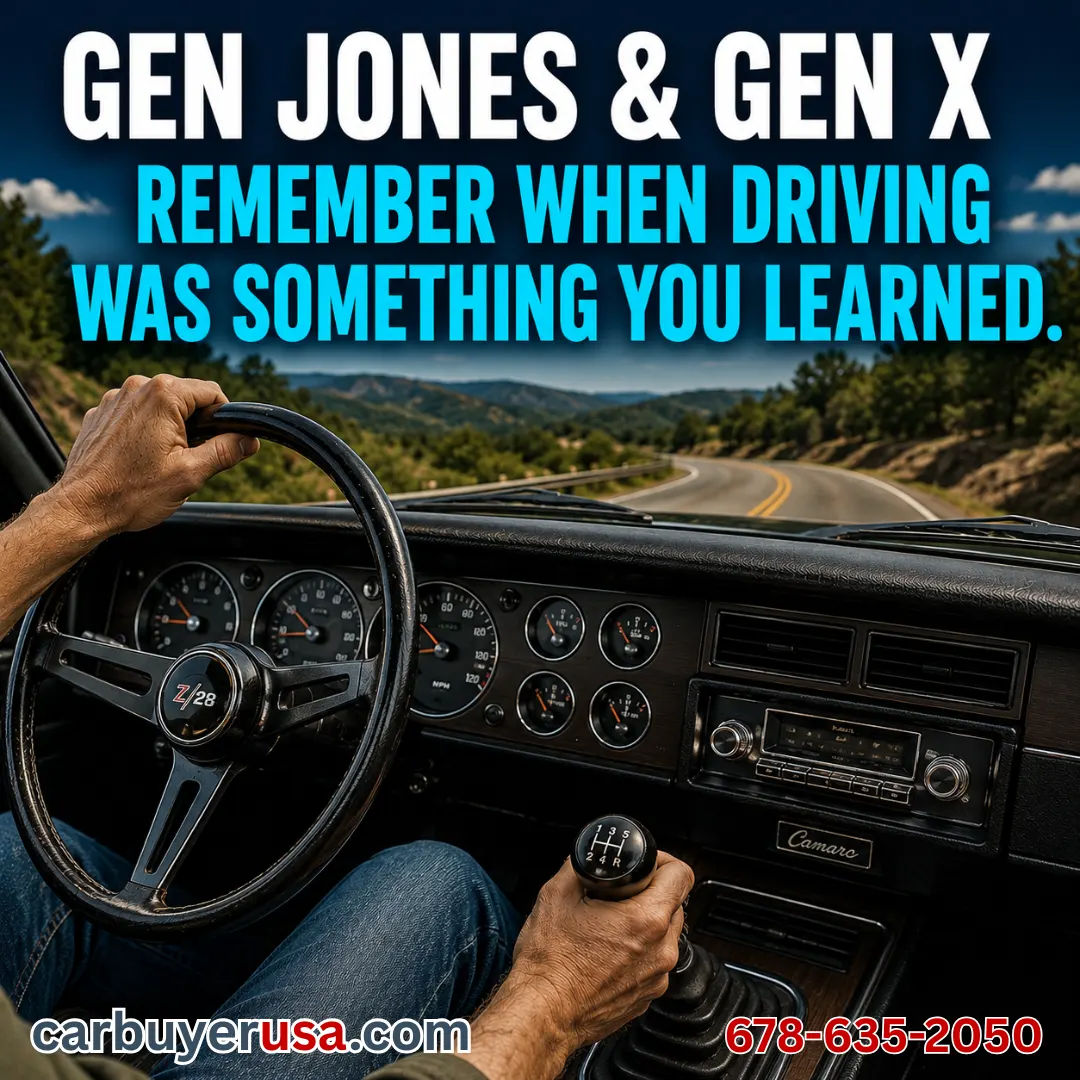
For Generation Jones and Generation X, learning to drive wasn't just another box to check on the road to adulthood. It was a rite of passage that demanded patience, coordination, and more than a little determination. Long before touchscreens, backup cameras, and vehicles that practically drive themselves, many of us climbed behind the wheel of a car with three pedals and a manual transmission. There were no driving modes to select, no electronic hill-hold assist, and certainly no smartphone reminding us where to turn next. If you wanted to get down the road, you had to learn how to make the car work with you.
For many of us, that first vehicle wasn't a shiny sports car or a brand-new pickup. It was whatever happened to be sitting in the driveway. Maybe it was Dad's pickup truck, Mom's family sedan, an older Volkswagen, a compact import, or the hand-me-down that had already survived years of teenage drivers before you ever got the keys. Whether we liked it or not, if it had a stick shift, we learned. We stalled the engine, missed a gear now and then, and probably experienced the embarrassment of rolling backward on a hill before finally figuring it out. Those experiences weren't failures. They were part of becoming a driver.
One of the biggest differences between then and now is how connected we were to the vehicle itself. We didn't rely on a computer to tell us when something was happening because we could feel it. The engine's sound, the vibration through the steering wheel, the engagement of the clutch, and the resistance of the shifter all became part of the conversation between driver and machine. It taught us to pay attention, anticipate traffic, and understand how a vehicle responded in different weather and road conditions. Driving required participation, and for many people, that made it far more rewarding.
Then and Now: How Driving Has Changed
Yesterday |
Today |
|---|---|
Three pedals |
Two pedals |
Manual gear changes |
Computer-controlled shifting |
Paper maps in the glove box |
GPS navigation |
Turn a metal key |
Push-button start |
Learn vehicle feel |
Learn infotainment menus |
Driving was part of the adventure |
Driving is often just transportation |
There is no question that today's vehicles are technologically superior in almost every measurable way. Modern automatic transmissions shift more quickly than even experienced drivers can manage, fuel economy has improved dramatically, and advanced safety systems have helped prevent countless accidents. Electric vehicles have taken that evolution even further by eliminating traditional transmissions altogether. Progress has unquestionably made vehicles safer, quieter, and more efficient.
At the same time, many members of Generation Jones and Generation X can't help but feel that something intangible has been left behind. Our cars represented independence in a way that's difficult to explain to younger generations. They were how we got to our first jobs, first dates, concerts, weekend road trips, and countless late-night drives with friends. A driver's license wasn't simply permission to travel. It represented freedom, responsibility, and the excitement of discovering the world on our own schedule. The manual transmission became part of those memories because it required us to become active participants in every mile we drove.
As automotive technology continues to evolve, manual transmissions have become increasingly rare. Automakers have responded to changing consumer preferences by focusing on automatic and electric vehicles because that's what the overwhelming majority of buyers now choose. While a manual transmission was once common in everything from economy cars to pickup trucks, today it's become a specialty feature found in only a small number of enthusiast-oriented models. For those who grew up shifting gears every day, it's another reminder of how quickly the automotive landscape has changed.
At CarBuyerUSA, we know that selling a vehicle is rarely just about the vehicle itself. Many of the cars we evaluate have been part of a family's story for years, sometimes decades. They carried children to school, hauled camping gear across the country, survived countless commutes, and became part of memories that have nothing to do with horsepower or resale value. Whether your vehicle has a manual transmission, an automatic, or the quiet simplicity of an electric drivetrain, every vehicle has its own history.
That's why CarBuyerUSA.com will provide a vehicle value in about 20 seconds, giving owners a fast and convenient way to understand today's market before making any decisions. While the automotive world continues to move forward with new technology, there's still something worth appreciating about the generations that learned to drive when every shift, every clutch release, and every mile required a little more involvement. Generation Jones and Generation X didn't just learn how to operate a vehicle. We learned how to drive, and for many of us, that's a memory that never goes out of gear.