Selling a vehicle is usually straightforward. Selling one that belongs to an estate can feel like an entirely different matter.
If you've recently lost a family member or are helping settle someone's estate, the car in the driveway may be one more responsibility added to an already long list. You may not know where the title is, whether there's still a loan, who is legally allowed to sell the vehicle or even whether you need to transfer it into your own name first.
Start with this: don't rush the sale until you know who has legal authority to handle the vehicle.
Estate and vehicle-title laws vary by state, and the correct process can depend on how the vehicle was titled, whether there is a surviving co-owner or designated beneficiary, and whether the estate is going through probate. Some states also provide simplified procedures for qualifying estates.
First, Find the Vehicle Paperwork
Locate the vehicle's title and registration if possible. Check the title carefully to see exactly whose name appears on it and whether another owner is listed.
Next, determine whether there is an outstanding loan or lien. A lien can change what must happen before ownership can be transferred or the vehicle sold. If you cannot find the title, contact the motor vehicle agency in the state where the vehicle was titled to learn the procedure for an estate or replacement ownership document. Don't assume a bill of sale alone will solve a missing-title problem.
The executor, administrator, surviving owner, beneficiary or heir may need documentation establishing their authority before a sale can take place. The exact documents depend on the state and circumstances.
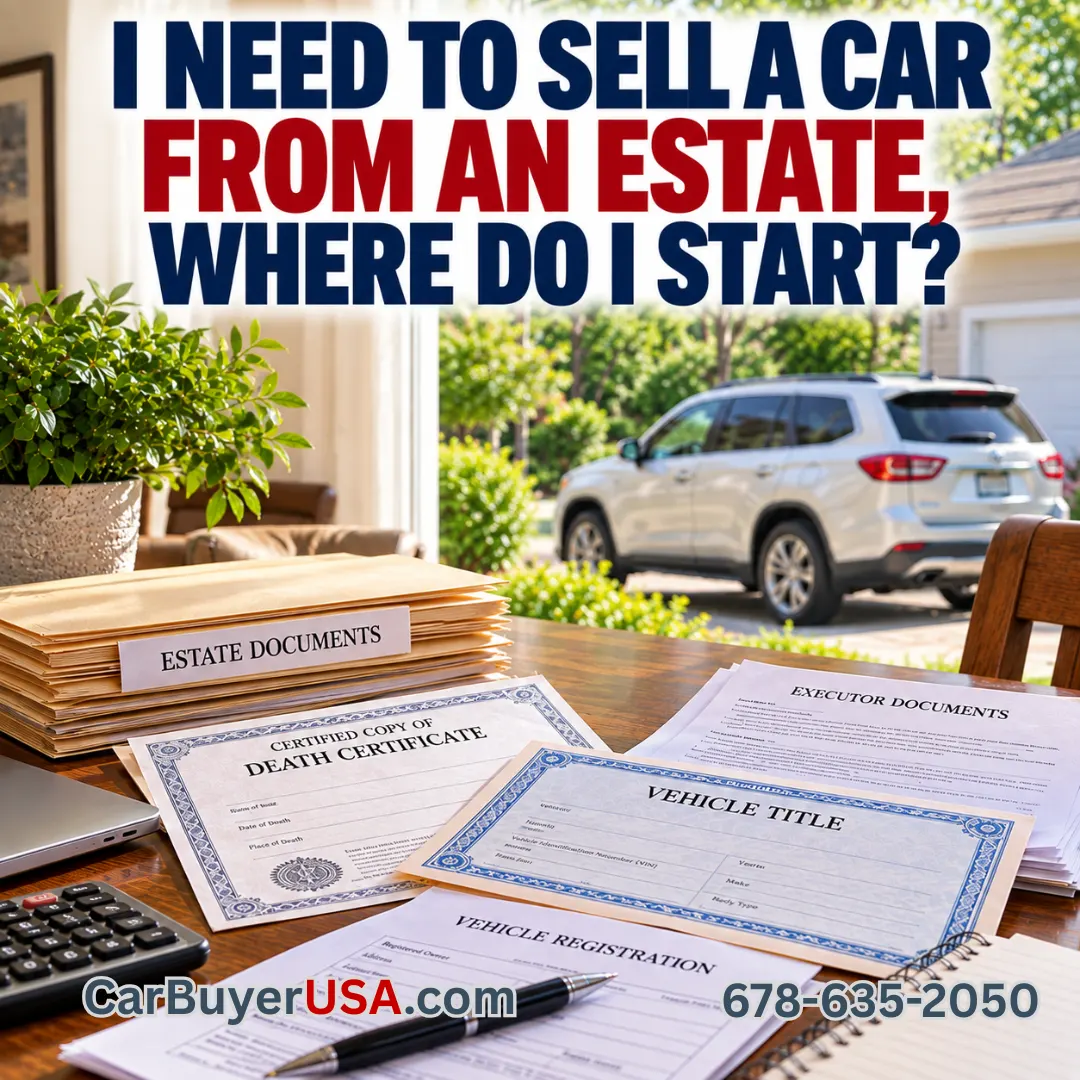
What Should I Gather Before Trying to Sell an Estate Vehicle?
Look For |
Why You May Need It |
|---|---|
Vehicle title |
Establishes how the vehicle is legally titled |
Certified death certificate |
Frequently required when transferring a deceased owner's
vehicle |
Executor/administrator documents |
May establish authority to handle estate property |
Trust documents |
May be necessary if the vehicle belongs to a trust |
Beneficiary documentation |
May apply if the title includes a transfer-on-death beneficiary |
Loan/lien information |
Determines whether another party has a financial interest in
the vehicle |
Current registration |
Helps confirm vehicle and ownership information |
VIN and current mileage |
Important for identifying and valuing the vehicle |
State-specific forms |
Estate vehicle procedures vary from one state to another |
Don't Spend Money on the Car Before You Know Its Value
An estate vehicle may have been sitting for months. The battery could be dead, registration may be expired, maintenance may be overdue or the vehicle may simply need a serious cleaning.
That doesn't automatically mean you should start spending estate money on repairs. Before putting hundreds or thousands of dollars into a vehicle you're planning to sell anyway, find out what it may be worth in its current condition. The cost of making the vehicle "sale ready" may not produce an equal increase in what someone will actually pay for it.
This becomes especially important when the person handling the estate lives in another city or state. Coordinating repairs, detailing, advertising, strangers coming to the property and private-sale negotiations can turn one vehicle into a surprisingly large project.
There May Be a Much Easier Way to Sell It
Once you've established that you have the authority and documentation necessary to sell the vehicle, CarBuyerUSA can help simplify the selling side of the process.
We are a nationwide vehicle buyer, which can be particularly helpful when an estate vehicle isn't located near the person handling the estate. You can enter the vehicle information online and receive a vehicle value in 20 seconds, without providing an email address or phone number just to see the value. You don't have to advertise the car, arrange meetings with private buyers or spend weeks waiting for someone to show up with the money.
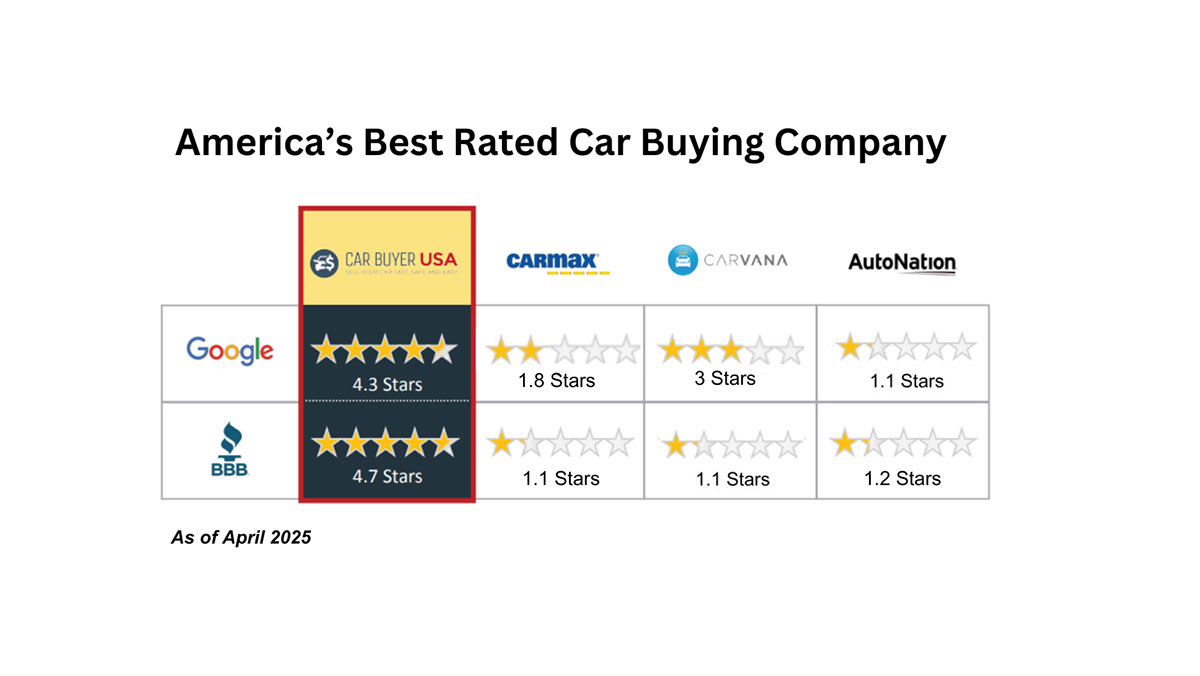
CarBuyerUSA has been buying vehicles nationwide for 14 years, has purchased more than $1 billion in vehicles and holds a 4.3-star rating. We come to the seller, with same-day payment available for drop- offs and next-day payment for courtesy pickups.
Settling an estate can involve dozens of decisions. Selling the vehicle doesn't have to become another complicated one. Once the legal paperwork is in order, visit CarBuyerUSA.com and find out what the estate vehicle may be worth, and whether you can cross one more responsibility off your list.