Millions of Drivers Affected
For many drivers, a recall notice feels more like an inconvenience than an urgent priority. The envelope gets opened, glanced at, and eventually ends up in a pile of paperwork that never gets another look. Unfortunately, that casual approach can leave a known safety defect sitting in your driveway for months, or even years.
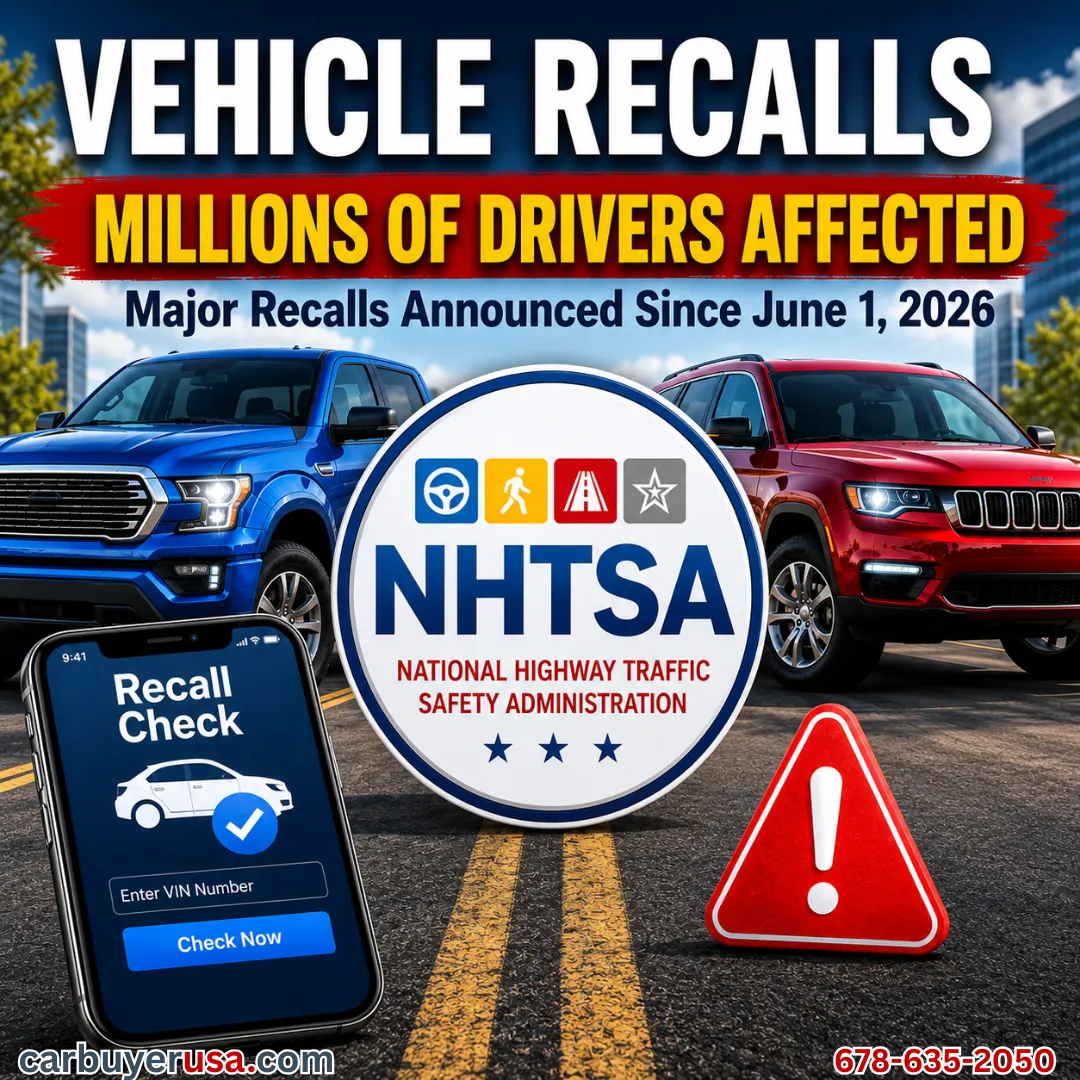
Since June 1, 2026, automakers have announced a wave of major recalls affecting millions of vehicles across the United States. Some involve software that can prevent a transmission from remaining securely in Park. Others involve airbags, seat belts, electrical systems, instrument clusters, power steering components, and even fire risks. While every recall is unique, they all have one thing in common: the manufacturer determined that the defect was significant enough to repair at no cost to the owner.
Today's vehicles contain more computers, sensors, cameras, wiring, and electronic control modules than ever before. That technology has improved performance, fuel economy, convenience, and safety, but it has also increased the complexity of modern automobiles. When manufacturers discover that a component doesn't perform as intended, issuing a recall becomes the fastest way to correct the problem before additional accidents or injuries occur.
Major U.S. Vehicle Recalls Announced Since June 1, 2026
Manufacturer |
Approx. Vehicles
Affected |
Primary Recall Concern |
|---|---|---|
Ford |
741,195 |
Transmission software may allow vehicle
rollaway |
Honda |
1,049,883 |
Defective tire repair kit sealant bottle |
Jeep |
1,076,699 |
Electric power steering component poses fire
risk |
Land Rover |
250,857 |
Airbag clockspring connector corrosion |
Hyundai |
96,300 |
Instrument cluster display failure |
Jeep (Grand Cherokee) |
419,000+ |
Side airbag deployment software issue |
Ford |
420,000+ |
Front seat belt retractor concerns |
Subaru |
69,000+ |
Moonroof glass may detach while driving |
Although these recalls involve different brands and different parts, they prove one thing clearly: safety problems can affect any vehicle, no matter how trusted, expensive, or popular it may be. A recall does not only matter after something goes wrong. Recalls are meant to prevent failures before they happen. Many defects show no warning lights, sounds, or obvious symptoms until the wrong moment. Software issues, electrical problems, airbag concerns, fire risks, steering defects, and rollaway hazards should never be ignored simply because the vehicle seems fine today.
Completing recall repairs also helps protect resale value. Buyers, dealers, and vehicle history reports increasingly flag open recalls, and unresolved safety issues can create hesitation during a sale. Since recall repairs are usually completed at no cost, owners have little reason to delay.
In many cases, the repair includes updated software or improved parts designed to correct weaknesses discovered after the vehicle was built. Ignoring a recall does not make the defect disappear. It only leaves a known problem unresolved when the manufacturer is already offering to fix it.
Team CarBuyerUSA encourages every vehicle owner to take manufacturer recalls seriously. The official NHTSA VIN Lookup is the best place to determine whether your vehicle has any open safety recalls, while your manufacturer's website can help you schedule the free repair and confirm that replacement parts are available. A few minutes spent checking today could prevent a much larger problem tomorrow, making recall repairs one of the easiest, and most important steps you can take to keep your vehicle safe.