YOU'RE SELLING THE CAR. YOU'RE NOT SELLING YOUR DIGITAL LIFE WITH
You cleaned out the fast-food wrappers. You grabbed the sunglasses. You found the missing charger under the passenger seat. Great.
Now did you delete your home address from the navigation system? Remove your toll transponder? Clear your garage-door programming? Disconnect your phone? Take the memory card out of the dashcam? And what about your license plates?
Selling a modern vehicle isn't just about emptying the glovebox anymore. Your car can contain personal belongings, identifying documents, account information and a surprising amount of digital data. Before handing over the vehicle, give it a serious physical, digital and administrative cleanout.
START WITH THE OBVIOUS — THEN SEARCH WHERE YOU NEVER LOOK
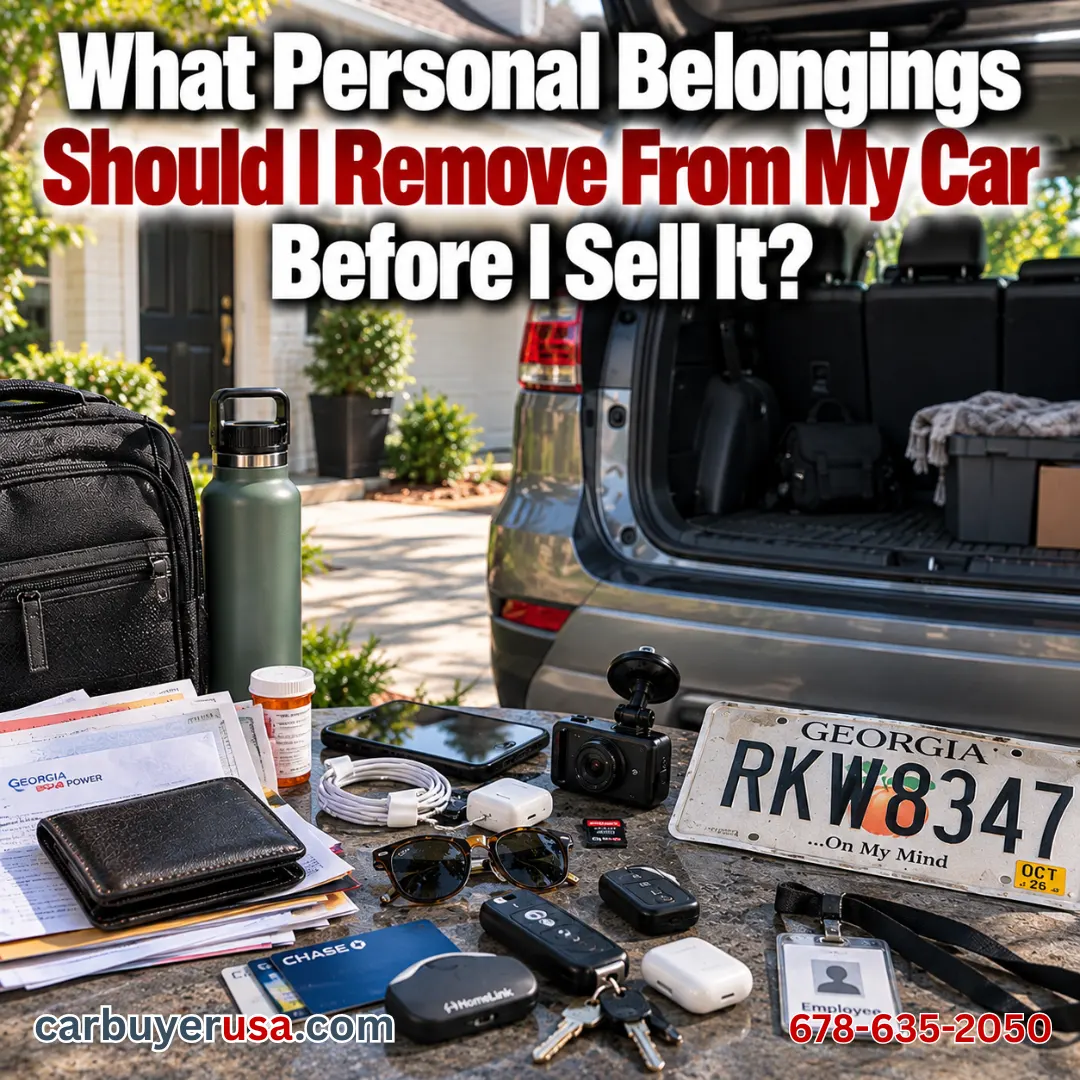
Go through the entire vehicle, not just the center console. Check under every seat, inside seatback pockets, door pockets, the glovebox, center console, trunk, cargo compartments and spare-tire area. If your vehicle has hidden floor storage or compartments you've forgotten existed, open them.
Old insurance documents, medical paperwork, prescription bottles, receipts, mail and work badges can contain your full name, address, account information or other personal details. And don't forget the garage-door remote clipped to the visor. You probably don't want to give a stranger your vehicle and the button that may open your house.
YOUR CAR MAY KNOW MORE ABOUT YOU THAN YOU REALIZE
Modern infotainment systems can retain information long after you've unplugged your phone. Before the vehicle leaves your possession, review the manufacturer's instructions for properly deleting personal information and resetting applicable systems.
Here's your pre-sale sweep:
Remove / Delete / Disconnect |
Why It Matters |
|---|---|
Personal documents and mail |
May contain addresses, account numbers or identifying
information |
Insurance paperwork |
May contain personal and policy information |
Receipts |
Can reveal names, locations or payment information |
Prescription bottles / medical
documents |
Contain highly personal information |
Garage-door opener / HomeLink
programming |
May provide access to your home |
Gate / community remotes |
May provide access to private property |
Toll transponder |
Could remain connected to your toll account |
License plates — where
applicable |
State rules vary: plates may need to be removed, transferred,
retained or surrendered after the sale |
Parking passes / garage access
cards |
May identify or provide access to your home or workplace |
Work badges / security cards |
Could identify your employer or provide building access |
Dashcam and memory card |
May contain recordings, locations and other personal data |
USB drives / memory cards |
May contain personal files |
Paired Bluetooth devices |
Disconnect phones and other devices |
Saved contacts |
Your vehicle may have copied your address book |
Call / message history |
Stored communication information may remain |
Saved home and work addresses |
Can tell the next owner exactly where you live or work |
Recent navigation destinations |
Can reveal frequently visited locations |
Apple CarPlay / Android Auto
connections |
Remove associated devices and profiles |
Driver profiles |
May contain preferences and connected-account information |
Wi-Fi / hotspot information |
Remove saved network or account information where
applicable |
Manufacturer connected-car
account |
Remove or transfer the vehicle from your account as
appropriate |
Saved payment information |
Remove stored payment credentials where supported |
Spare house keys |
You definitely don't want these leaving with the car |
Phones, chargers and electronics |
Check every outlet, console and compartment |
Everything under the seats |
Because apparently this is where possessions go to retire |
DON'T FORGET THE LICENSE PLATES
This one deserves more attention because license-plate rules are not the same nationwide.
Depending on the state and plate type, plates may stay with the seller, stay with the vehicle, be transferred to another vehicle, or need to be surrendered or otherwise handled through the state's motor- vehicle agency. For example, Nevada tells sellers to retain their plates and either transfer or surrender them; South Carolina requires surrender of an active plate after a sale if it isn't transferred.
So before the vehicle leaves, check the requirements of the state that issued your plates.
Don't assume the buyer gets them just because they're bolted to the bumper. And don't throw them in your garage for the next five years if your state requires them to be surrendered.
The same applies to registration cancellation and insurance. Follow your state's required order of operations so you don't accidentally create an insurance or registration problem after you've already sold the vehicle.
FACTORY RESET DOESN'T MEAN “PUSH RANDOM BUTTONS UNTIL EVERYTHING DISAPPEARS”
Retrieve anything you want to keep first, then follow the manufacturer's instructions for deleting personal information or performing the appropriate reset.
Also check your manufacturer's app or connected-car account. Erasing the dashboard screen doesn't necessarily remove the vehicle from every account associated with it. The goal is simple: when the next owner turns on the vehicle, your digital fingerprints shouldn't still be sitting there waiting for them.
DON'T CLEAN OUT THINGS THAT ACTUALLY BELONG WITH THE CAR
There's a difference between removing your belongings and stripping useful equipment from the vehicle. Leave the owner's manuals, factory cargo equipment, wheel-lock key, removable factory accessories and other equipment that belongs with the car. And if you have a second key or key fob, have it ready.
ONE FINAL SWEEP — THEN SELL IT
Before the vehicle leaves, open everything one last time. Check the glovebox. Look under the seats. Empty the trunk. Remove personal documents. Disconnect your phone. Delete saved addresses. Remove the toll transponder. Deal with your plates according to your state's requirements. Because your favorite sunglasses can be replaced.
Your privacy is a little harder to get back. Then go to CarBuyerUSA.com and see what your vehicle may be worth in 20 seconds without entering your phone number or email first.
And if something more complicated turns up, a title problem, lien, ownership question or paperwork you're not sure how to handle, contact the CarBuyerUSA team. Our team can review what you're dealing with and help explain what may be needed to complete the sale.
Keep your belongings. Keep your personal information. Handle your plates correctly. We'll take the car.