When Park Outside Becomes A Serious Vehicle Safety Warning!
For generations, parking a car seemed pretty simple. Pull into the garage, shut off the engine, grab your stuff and walk inside. Once the ignition was off, most people assumed the vehicle was essentially asleep until somebody started it again.
Modern vehicles have complicated that assumption.
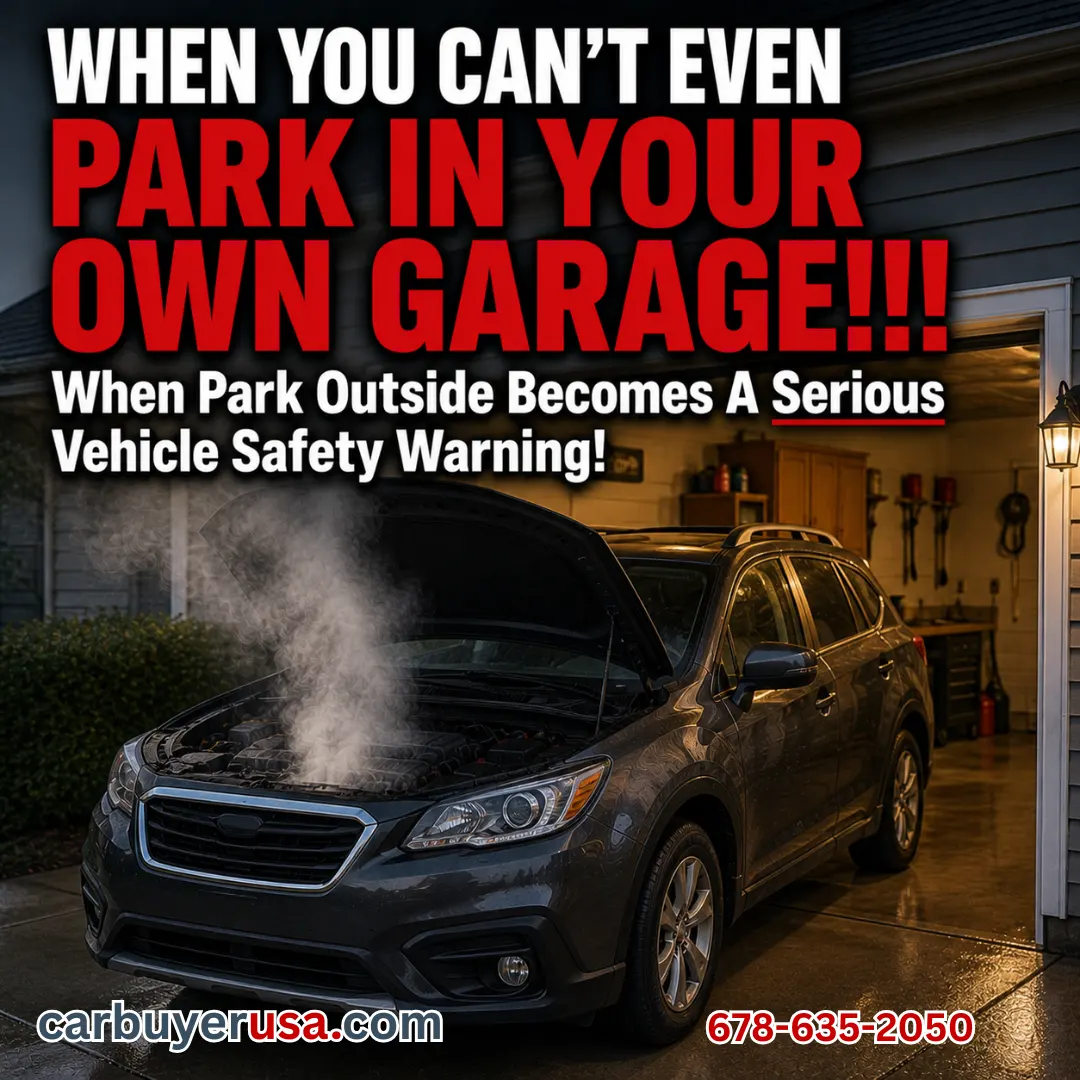
Some automotive safety recalls are now serious enough that owners are specifically instructed to park their vehicles outside and away from buildings and other vehicles until repairs are completed. The concern isn't necessarily a fire while you're driving. In certain cases, the vehicle may present a fire risk while simply sitting there. That's something every vehicle owner should understand.
What Does "Park Outside" Actually Mean?
A park-outside warning is generally associated with a safety defect that creates a potential fire hazard. When that instruction accompanies a recall, it shouldn't be treated as a suggestion about where your car might enjoy spending the evening.
It means follow the manufacturer's instructions until the affected vehicle has been repaired. Recent recalls demonstrate that these problems aren't exclusive to electric vehicles. Gas-powered vehicles, hybrids and plug-in hybrids can all potentially be affected by defects involving electrical systems, batteries, wiring and powered components.
One 2026 recall involving more than one million SUVs and pickups, for example, involved an electrical connection in the power-steering system that could overheat and potentially cause a fire. Other fire-risk recalls have involved high-voltage batteries and power-seat components.
In other words, the problem isn't simply what's under the hood anymore.
What Can Create a Fire Risk in a Parked Vehicle?
Potential Problem
|
What Can Go Wrong |
|---|---|
High-Voltage Battery
|
Internal damage or failure can create overheating and fire risk |
Electrical Wiring & Connections
|
Faulty connections or short circuits can generate excessive heat |
Relays & Electrical Components
|
Damage or corrosion can contribute to overheating or electrical failure |
Power-Seat Components
|
A malfunction can allow a motor to continue operating and overheat |
Power-Steering Electrical Systems
|
Faulty electrical connections can generate enough heat to create a fire hazard |
But How Can A Car Catch Fire When It's Off?
Because "off" doesn't necessarily mean electrically dead.
Modern vehicles contain computers, control modules, sensors, security equipment, battery-management systems and dozens of electrical circuits. Certain systems can remain energized or active after you've shut down the vehicle and walked away.
If an electrical connection overheats, wiring shorts or a battery develops an internal problem, turning the ignition off doesn't automatically eliminate the danger.
That's why the specific instructions attached to a recall matter. If owners are instructed not to charge a vehicle, don't charge it. If they're told to park outside and away from structures, putting it inside an attached garage defeats the entire purpose of the warning.
Don't Assume Your Vehicle Isn't Included
Recall campaigns can cover enormous numbers of vehicles, but recall eligibility is typically determined using the individual vehicle's 17-character Vehicle Identification Number (VIN).
Owners can check their VIN through the federal recall database to determine whether their particular vehicle has an unrepaired safety recall. Manufacturers are responsible for providing remedies for safety recalls, generally without charging the owner.
It's also worth checking periodically instead of assuming that because your car wasn't recalled last year, nothing has changed. New recalls continue to be announced, investigations develop and recall information can be updated.
What If You're Thinking About Selling?
An open recall doesn't automatically mean your vehicle is worthless, and it doesn't necessarily mean you cannot sell it. But you should know exactly what you're dealing with.
Check the VIN, understand the recall, determine whether the repair is currently available and keep documentation of any recall work that has already been completed.
And if you're considering selling the vehicle anyway, don't simply assume a recall has destroyed its value.
At CarBuyerUSA.com, we believe vehicle owners should understand both the condition of their car and what it may actually be worth before deciding what to do next.
Because today's vehicles have changed one very old assumption:
Parked doesn't always mean powerless, and turned off doesn't necessarily mean nothing is happening.