

Selling A Ferrari Is Not The Same As Selling A Car Ferrari ownership exists in a completely different world than ordinary vehicle ownership. Nobody buys a Ferrari because they need transportation. They buy one because they appreciate engineering, performance, exclusivity, and the experience that comes with driving one of the most recognizable automotive brands ever...
Read More
You Mean Someone Will Actually Pay Cash? The Question Almost Everybody Asks When people start thinking about selling a vehicle, the first thing they usually want to know is what the car is worth. It sounds like a simple question, but in reality it often creates more confusion than answers. Within minutes, most sellers find...
Read More
Why Has Finding Your Car's Value Become So Complicated? If you have tried to determine what your vehicle is worth online recently, you have probably experienced the same frustrating routine millions of vehicle owners encounter every day. What starts as a simple search for information quickly turns into a surprisingly invasive process that feels less...
Read More
The Question That Sounds Smart But Usually Isn't Few questions get searched more often by vehicle owners than "Who pays the most for used cars?" On the surface, it seems like a perfectly logical thing to ask. If you're about to sell a vehicle, why wouldn't you want to find the buyer willing to pay...
Read More
The Car Was Built For Speed ~ Selling It Shouldn't Take Forever A McLaren is not the kind of vehicle people buy by accident. These cars represent a level of engineering, performance, and exclusivity that places them in a category far removed from ordinary transportation. Whether it is a 570S, 720S, Artura, GT, or one...
Read More
The Search For The Unicorn Buyer Every vehicle seller eventually asks the same question...WHO pays the most for used cars? At first glance, it seems like a perfectly reasonable thing to ask. If you're selling a vehicle, shouldn't you find the buyer willing to pay the most money? The problem is that the question assumes...
Read More
The Most Expensive Number In The Car Business One of the most expensive numbers in the automotive world is often the first one a vehicle owner sees online. That estimate feels official. It looks precise. It creates confidence. In some cases, it even creates excitement. The problem is that many vehicle owners mistake that estimate...
Read More
There are two completely different versions of a Range Rover. The first version exists in the showroom. It sits under perfect lighting surrounded by luxury branding, polished floors, and salespeople explaining why this particular SUV represents the pinnacle of automotive sophistication. The second version usually appears about five years later. That version is sitting in...
Read More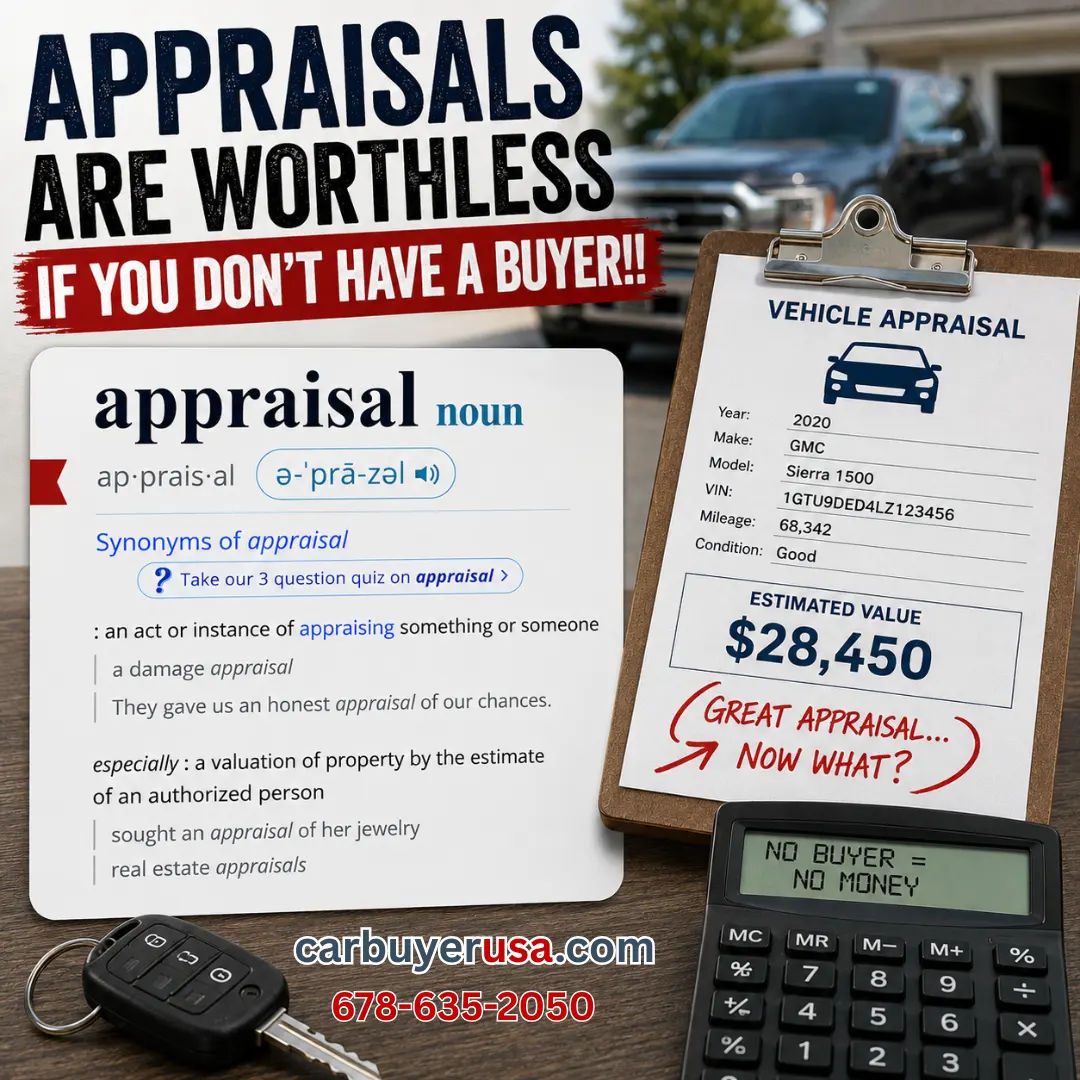
Vehicle owners spend an incredible amount of time chasing appraisals. They compare estimates, request valuations, read pricing guides, and collect opinions from every corner of the internet. By the end of the process, many have accumulated a stack of numbers that supposedly represent what their vehicle is worth. Unfortunately, none of those numbers actually matter...
Read More
All It Take Is ONE PHONE CALL - (678) 635-2050 FIND OUT NOW! One of the most common reasons people delay selling a vehicle has nothing to do with the vehicle itself. It is the loan attached to it. Many owners assume that because they still owe money, selling simply is not an option. As...
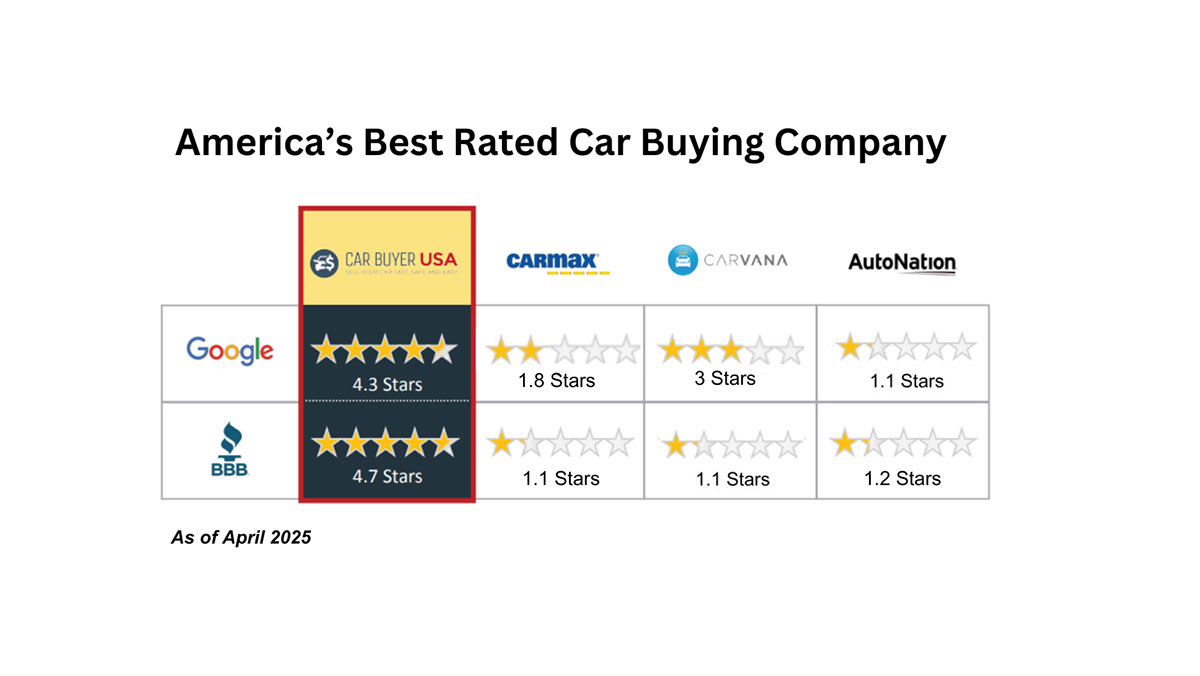
Read MoreCarBuyerUSA's Ratings VS The Big Guys

How It Works
We pay cash for cars, trucks, & SUVs, in any condition, anywhere in the Continental USA.
1
Get an Instant Cash Offer
Enter the Year, Make, Model, Trim Level & Miles (No VIN Required) and your cash offer appears onscreen (94% of the time)
2 Accept your offer
CarBuyerUSA offers are Cash Market Value.
Funds are guaranteed and paid at the time of pickup or drop-off
3Talk to an Agent
Your CarBuyerUSA representative schedules a no obligation inspection. In most markets an on-site mobile inspection can be arranged. The digital purchase agreement takes less than 60 seconds to complete.
4 Get Paid
When CarBuyerUSA picks up your truck, you are paid on the spot in full with guaranteed funds – entire process is hassle free.
Inspection, title work & pick up are all FREE.